
Sunbeds have become increasingly popular for achieving a fast, even, and natural-looking tan. They simulate the effects of natural sunlight by emitting controlled UV radiation, which stimulates melanin production in the skin. While convenient and effective, many users wonder: how long should you wait to shower after a sunbed session?
Showering too soon can strip away natural oils that protect your skin, while waiting too long may cause sweat and debris to remain on the skin’s surface, potentially leading to irritation or uneven tanning. This comprehensive guide will explore how sunbeds affect your skin, the optimal waiting time before showering, and best practices for post-sunbed care to ensure healthy, long-lasting results.
How Sunbeds Affect Your Skin
Using a sunbed exposes your skin to UV light, which triggers several physiological responses:
- Pore dilation: The heat and UV light cause pores to open slightly, helping the skin breathe and allowing melanin to deposit evenly.
- Increased oil production: Natural oils are secreted to protect the skin from drying out and help maintain a smooth, hydrated surface.
- Melanin stimulation: UV exposure activates melanin, the pigment responsible for tanning, resulting in a darker, more even skin tone.
While these responses are beneficial for tanning, they also make the skin temporarily sensitive. Improper post-sunbed care can lead to dryness, irritation, or uneven color.
Recommended Waiting Time Before Showering
General Guidelines
Most dermatologists and skincare specialists recommend waiting 2–4 hours after a sunbed session before showering. This window allows your skin to absorb the benefits of natural oils and stabilize after UV exposure.
Factors Influencing Waiting Time
- Skin type: Dry or sensitive skin may require closer to 4 hours, while oily or more resilient skin can shower sooner.
- Sunbed intensity and session length: High-intensity or long-duration sessions may increase skin sensitivity, necessitating a slightly longer wait.
- Use of tanning lotions or oils: Applying moisturizing or tanning-enhancing products may justify a longer wait to allow proper absorption.
Post-Sunbed Shower Tips
- Use lukewarm water instead of hot water to avoid stripping oils
- Choose gentle, moisturizing cleansers
- Pat your skin dry with a soft towel rather than rubbing
- Avoid scrubbing or exfoliating immediately after the session
Following these steps can maximize the tanning effect while protecting your skin from irritation.
Post-Sunbed Skin Care Practices
Hydration and Moisturizing
Moisturizing is crucial after sunbed use because UV exposure can temporarily dehydrate your skin. Consider:
- Aloe vera-based moisturizers
- Glycerin or hyaluronic acid lotions
- Lightweight creams that absorb quickly without clogging pores
Regular hydration helps maintain smooth skin, prevents flaking, and prolongs the tan.
Avoiding Irritation
- Skip harsh exfoliants, strong soaps, or highly fragranced products immediately after sunbed use
- Avoid hot tubs, saunas, or direct heat that can irritate freshly exposed skin
Maintaining a Long-Lasting Tan
- Hydrate frequently
- Use gentle sprays or lotions to enhance pigment deposition
- Avoid activities that cause excessive sweating immediately after the session
Sun Protection After Indoor Tanning
Even if you used a sunbed indoors, it is important to:
- Apply sunscreen when going outdoors
- Avoid prolonged exposure to direct sunlight immediately after a session to prevent overexposure
Common Mistakes to Avoid
| Common Mistake | Potential Impact |
|---|---|
| Showering immediately | Washes away natural oils, leading to dryness and irritation |
| Using hot water or harsh soaps | Can cause redness, dryness, and skin irritation |
| Over-exfoliating | Damages the skin barrier and negatively affects tanning results |
| Ignoring hydration | Leads to uneven color, dry skin, and flaking |
Avoiding these mistakes is key to maintaining healthy skin and achieving optimal tanning results with a sunbed.
Expert Recommendations
Dermatologists and tanning specialists generally agree on the following guidelines:
- Wait 2–4 hours before showering after a sunbed session
- Use gentle, lukewarm showers and mild cleansers
- Moisturize immediately after showering with a hydrating lotion
- Protect your skin from additional UV exposure after indoor tanning
Following these expert recommendations ensures maximum benefit from sunbed use while minimizing risks such as dryness, irritation, and uneven tanning.
Conclusion
Knowing how long to wait to shower after a sunbed is essential for safe and effective indoor tanning. Waiting 2–4 hours, using gentle cleansing methods, and applying proper moisturizers can protect your skin, maintain hydration, and enhance your tan. By following these steps, you can enjoy a healthy, even, and long-lasting tan while reducing potential skin damage and maintenance concerns.
Ready to relax in style? Discover our premium outdoor lounge chairs and sunbeds—send your inquiry to info@ligointl.com today and elevate your outdoor space!
FAQ
1. Can I shower immediately after a sunbed session?
No. Showering immediately can wash away natural oils that protect your skin, potentially causing dryness and irritation. It is generally recommended to wait 2–4 hours before showering after using a sunbed.
2. Why should I wait before showering after a sunbed?
Waiting allows your skin to absorb natural oils, stabilize after UV exposure, and maintain melanin distribution for a more even, longer-lasting tan. Showering too soon can reduce tanning effectiveness.
3. How long exactly should I wait to shower after a sunbed?
Most dermatologists recommend waiting 2–4 hours, depending on your skin type, sunbed intensity, and whether you used tanning lotions or oils.
4. Does my skin type affect how long I should wait?
Yes. Dry or sensitive skin benefits from waiting closer to 4 hours, while oily or more resilient skin may shower safely after about 2 hours.
5. Can I take a hot shower after a sunbed?
No. Hot water can strip natural oils, dry out your skin, and cause irritation. Always use lukewarm water with gentle cleansers after a sunbed session.
6. Should I moisturize before or after showering?
Moisturize after showering with a lightweight, hydrating lotion to lock in moisture and help maintain your tan. Ingredients like aloe vera, glycerin, or hyaluronic acid are ideal.
7. How can I make my sunbed tan last longer?
- Wait the recommended 2–4 hours before showering
- Use gentle, lukewarm water and mild cleansers
- Moisturize daily
- Avoid excessive sweating, friction, or sun exposure immediately after tanning
8. Is sun protection needed after indoor tanning?
Yes. Even indoor tanning exposes your skin to UV radiation, so applying sunscreen before going outdoors is essential to prevent overexposure and maintain skin health.
When creating outdoor spaces for high-end hotels, villas, or resorts, resort outdoor furniture plays a crucial role. Comfortable, durable, and visually appealing furniture not only enhances the overall space experience but also ensures long-lasting enjoyment for guests. With a wide variety of outdoor furniture available, selecting pieces that balance luxury, comfort, and durability can be challenging. This guide provides a comprehensive selection strategy to help you create high-end, comfortable, and long-lasting outdoor spaces.
Understanding Resort Outdoor Furniture
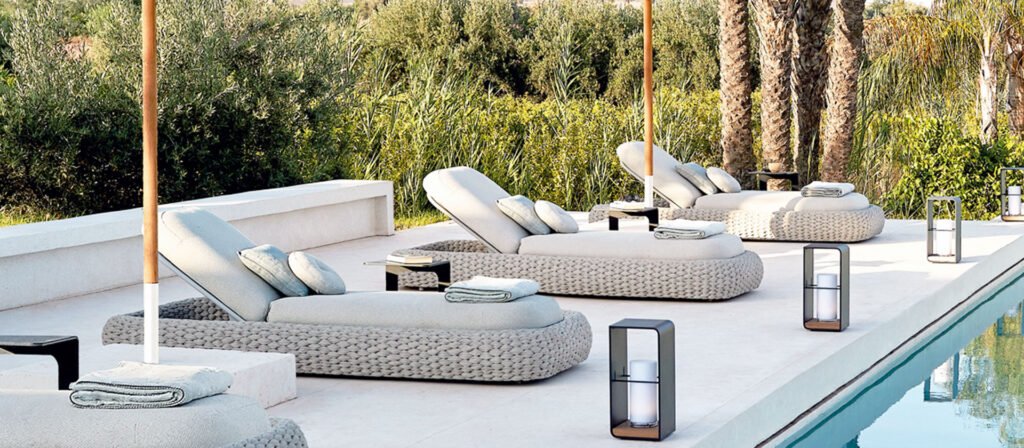
Resort outdoor furniture is designed specifically for hotels, villas, and resorts, emphasizing:
- Weather resistance
- Comfort and ergonomic design
- Visual appeal and style
Typical Application Scenarios
- Poolside lounge areas and terraces
- Gardens, courtyards, and landscaped spaces
- Public relaxation spaces in hotels or resorts
Carefully selected furniture enhances the luxury feel of outdoor areas while improving guest satisfaction and reinforcing brand image.
Key Factors When Choosing Resort Outdoor Furniture
Material Quality
Selecting durable materials is essential for ensuring the lifespan of resort outdoor furniture. Common high-quality materials include:
- PE/HDPE wicker: UV-resistant, water-resistant, mold-resistant
- Aluminum frame: lightweight, corrosion-resistant
- Teak wood: natural texture, strong weather resistance
- Marine-grade fabrics: fade-resistant, quick-drying, and durable
Material choice directly affects furniture durability and long-term investment value, while high-quality materials reduce maintenance costs.
Comfort and Ergonomics
Comfort is equally important, especially for guest experience in hotels or resorts. Factors to consider include:
- Ergonomic backrest angles for chairs and sofas
- Cushion thickness and high-quality fillings
- Modular configurations for flexible seating arrangements
Comfortable, ergonomically designed furniture not only extends usage time but also improves guest satisfaction.
Design and Style
Grand resort outdoor furniture often emphasizes luxury, modernity, and uniqueness. Key design considerations include:
- Modular sofa sets for adaptable layouts
- Color coordination with the surrounding environment
- Modern minimalist or classic luxury styles
Luxury and high-end outdoor furniture designs not only satisfy aesthetic requirements but also improve the functionality of outdoor spaces.
Durability and Maintenance
Hotels and resorts require furniture with high durability:
- Strong weaving and frame structures
- Stain-resistant and fade-resistant fabrics
- Easy-to-clean and low-maintenance features
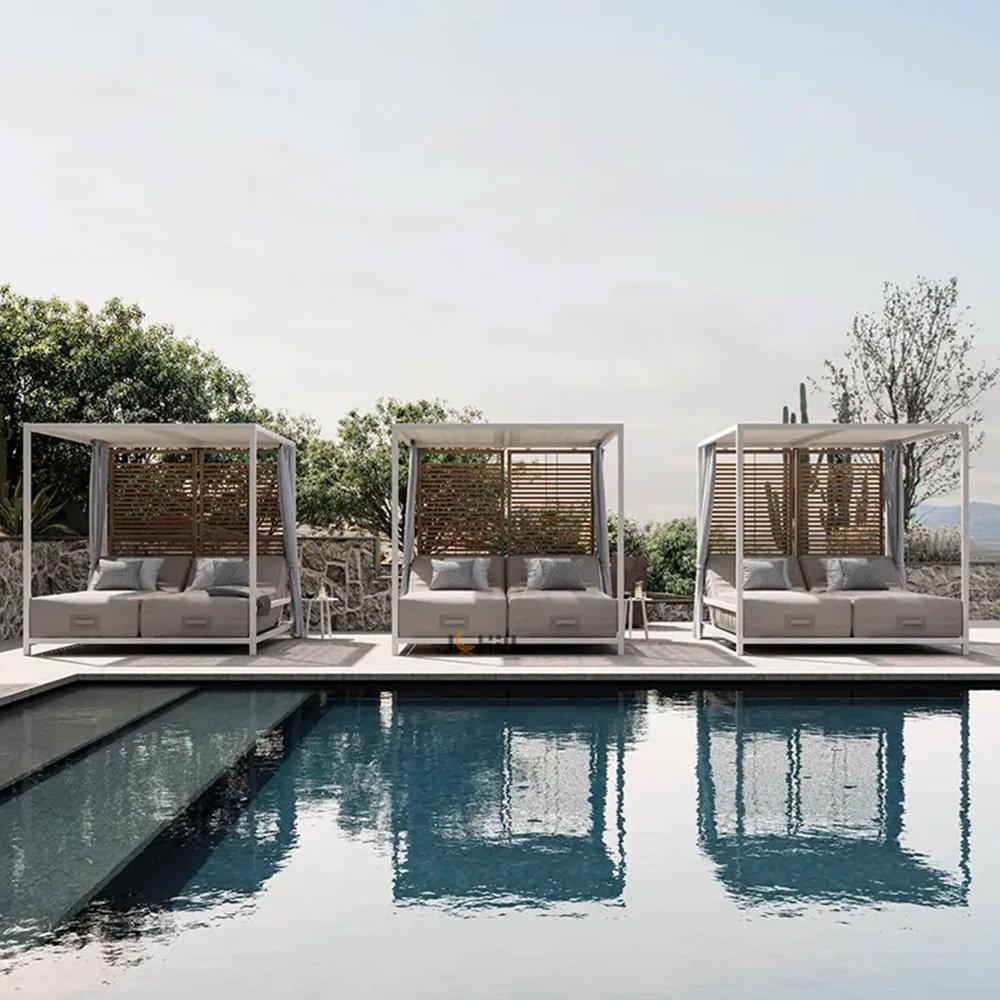
Poolside lounge chairs, outdoor daybeds, and modular sets with weather-resistant materials ensure longevity even in sun, rain, or humidity.
Customization Options
Customization is essential for creating unique outdoor spaces:
- Tailor sizes and configurations based on hotel or villa floor plans
- Choose specific materials, colors, and functional features
- Offer movable, stackable, or modular designs
Customized furniture not only maximizes space utilization but also creates a differentiated brand experience.
Popular Types of Resort Outdoor Furniture
Common types of outdoor furniture for hotels and resorts include:
| Type | Function | Application |
|---|---|---|
| Lounge chairs & daybeds | Relaxation and sunbathing | Poolside, terraces |
| Dining sets | Dining | Outdoor dining areas |
| Modular sofas | Modular seating | Gardens, public lounge spaces |
| Umbrellas & shade solutions | Sun protection | Gardens, pool areas |
| Accessories | Cushions, table covers, protective covers | Enhance comfort and durability |
High-quality furniture such as outdoor daybeds, poolside lounge chairs, and modular outdoor sofas are not only functional but also add style to outdoor resort spaces.
Budgeting and ROI Considerations
When selecting resort outdoor furniture:
- Focus on long-term investment rather than just initial cost
- High-quality furniture reduces maintenance and replacement expenses
- Enhances guest experience and elevates brand value
- Evaluate cost-effectiveness and expected lifespan
Tips for Ensuring Longevity of Your Resort Outdoor Furniture
- Regular cleaning: use soft cloths or brushes, avoid strong acidic cleaners
- Use protective covers: during rain or prolonged non-use
- Periodic inspections: check screws, connections, and cushions
- Avoid heavy impacts and direct sunlight
Proper maintenance effectively extends furniture lifespan while keeping it aesthetically pleasing.
Why Professional Manufacturers Matter
High-end resorts and hotels often choose professional suppliers for resort outdoor furniture for reasons such as:
- High-quality materials and strict weather-resistance testing
- Custom design solutions based on floor plans
- Warranty and international certifications (e.g., SGS, AQL)
For example, Outdoor Whale offers:
- HDPE wicker combined with aluminum frames for maximum durability
- Two factories totaling 28,000㎡ for high efficiency and reliable lead times
- Professional design team providing optimized space layouts
- Global B2B services for hotels, villas, and project clients
Professional manufacturers not only provide furniture but also deliver complete outdoor space solutions.
Conclusion
Choosing the ideal resort outdoor furniture enhances guest experiences while reducing long-term maintenance costs, ensuring maximum investment returns.
Whether for hotels, villas, or resorts, high-quality furniture is the key to creating comfortable, luxurious, and truly outdoor-ready spaces.
Upgrade your outdoor living with stylish resort outdoor furniture — contact info@ligointl.com to get started.
FAQ
Q1: What is the best material for resort outdoor furniture?
Durable materials like HDPE wicker, aluminum frames, and teak wood are ideal due to weather resistance and long lifespan.
Q2: How do I maintain outdoor daybeds and lounge chairs?
Regular cleaning, using protective covers, and checking cushions or frames can prolong furniture life. Avoid strong chemicals and prolonged direct sun exposure.
Q3: Can I customize modular outdoor sofas for a villa or resort?
Yes. Custom options allow tailored sizes, materials, colors, and layouts to fit your floor plans and brand style.
Q4: How long do grand resort outdoor furniture pieces last?
High-quality furniture can last 10+ years with proper maintenance, depending on material and environmental conditions.
Q5: Which outdoor furniture is ideal for poolside areas?
Poolside lounge chairs, outdoor daybeds, and modular seating sets with weather-resistant materials are recommended for both comfort and durability.
In the outdoor furniture industry, wicker is a classic and commonly used material, but many people do not understand the difference between natural rattan and PE wicker (synthetic / PE wicker).
Although natural rattan looks beautiful, it is not suitable for outdoor environments and tends to absorb water, grow mold, crack, and deform.
Materials that are truly suitable for long term outdoor use must be PE wicker or HDPE wicker.
These materials are specially treated to achieve:
- UV resistance
- Water resistance and moisture protection
- Fade resistance
- Not easily broken
- Higher structural stability when paired with a metal frame
Therefore, real weatherproof wicker outdoor furniture refers to furniture made with HDPE wicker combined with outdoor grade metal frames, capable of maintaining stable performance under sunlight, humidity, rain, and temperature changes.
Why Is Weatherproof Wicker Outdoor Furniture More Suitable for Outdoor Spaces?
Common problems with many outdoor furniture pieces include:
- Color fading
- Fabric aging
- Frame rusting or deformation
- Surface cracking
- Mold growth, water absorption, or unstable structure
Weatherproof wicker outdoor furniture exists to solve these issues. It offers:
- High durability against changing weather conditions
- Water resistance and mold resistance, even when placed near a swimming pool
- Woven structures that are flexible yet strong, with a more comfortable touch
- Lightweight yet high strength
- Excellent shape retention and long term appearance stability
To make this clearer, here is a comparison table:
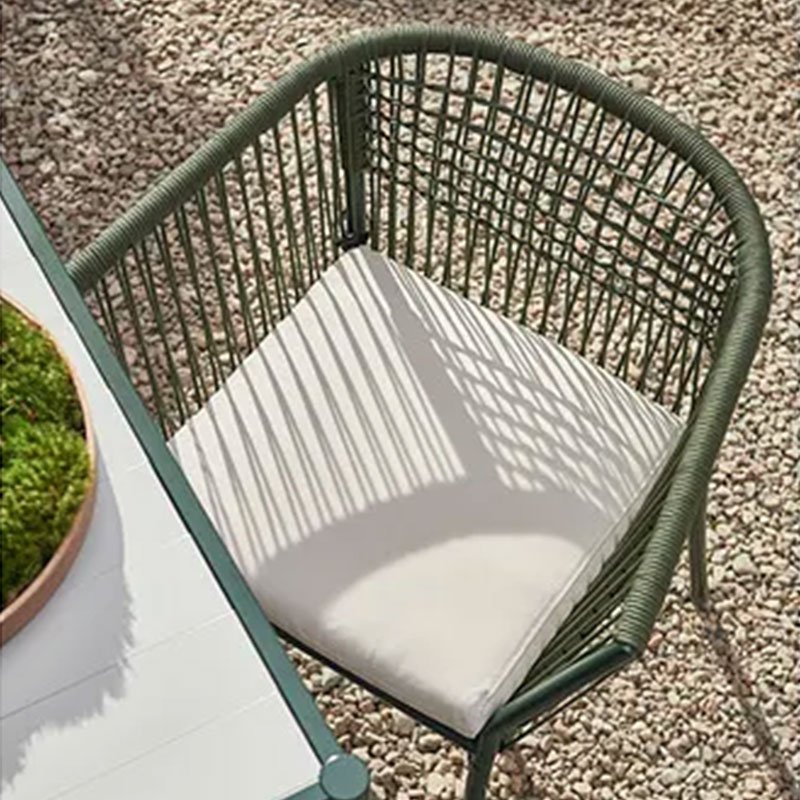
Comparison Table: PE/HDPE Wicker vs Natural Rattan
| Characteristics | Weatherproof PE/HDPE Wicker | Natural Rattan |
|---|---|---|
| UV Resistance | Strong | Weak |
| Water Resistance | Non absorbent, suitable for long term outdoor use | Easily absorbs water, molds |
| Weather Resistance | Resistant to rain, sun, humidity | Not suitable for outdoor environments |
| Lifespan | 5 to 10+ years | 1 to 2 years |
| Maintenance Difficulty | Low | High |
Core Materials of High Quality Weatherproof Wicker Outdoor Furniture
1. PE / HDPE Wicker (High End Outdoor Wicker Material)
HDPE offers higher durability and strength than regular PE and provides excellent UV resistance.
It is the most essential material in high end outdoor wicker furniture, especially suitable for areas with intense sunlight.
Key features include:
- Fade resistance
- No brittleness
- Strong plasticity
- Environmentally friendly and recyclable
2. Aluminum Frame
Premium wicker furniture must use aluminum alloy frames, because:
- They do not rust
- They are lighter
- They offer high structural stability
- They are ideal for humid or coastal environments
In comparison, iron and regular steel frames rust and corrode more easily.
3. Outdoor Grade Cushions
Complete outdoor wicker furniture must also be paired with outdoor fabrics and foams such as:
- Olefin fabric
- Sunbrella fabric
- Quick dry foam
These materials improve overall durability and provide a more comfortable outdoor experience.
How to Choose High Quality Weatherproof Wicker Outdoor Furniture?
When selecting wicker furniture, you can evaluate its outdoor suitability based on the following criteria:
- Confirm whether it uses PE / HDPE wicker
If it uses PVC, plastic mixtures, or natural rattan, it is not suitable for long term outdoor use. - The frame must be an aluminum frame
This directly affects lifespan and corrosion resistance. - Check weaving density and craftsmanship
The tighter and more uniform the weaving, the better the durability. - Choose cushions made with outdoor fabrics
Quality fabrics prevent fading and mold. - Check whether the brand offers color fading guarantees or structural warranties
This shows whether the brand prioritizes quality. - Factory quality certifications (enhances brand credibility)
Outdoor Whale follows SGS and AQL standards throughout materials and production.
Design Trends in Weatherproof Wicker Outdoor Furniture
Modern outdoor wicker furniture focuses on:
- Modular sofa sets for flexible layouts
- Outdoor dining sets for residential and commercial dining spaces
- More comfortable lounge chairs and daybeds
- Compact designs for small balconies and small apartments
- Mixed material designs combining wicker with aluminum or wood grain aluminum
Outdoor Whale specializes in customization and can create personalized layouts based on client floor plans to achieve better space utilization.
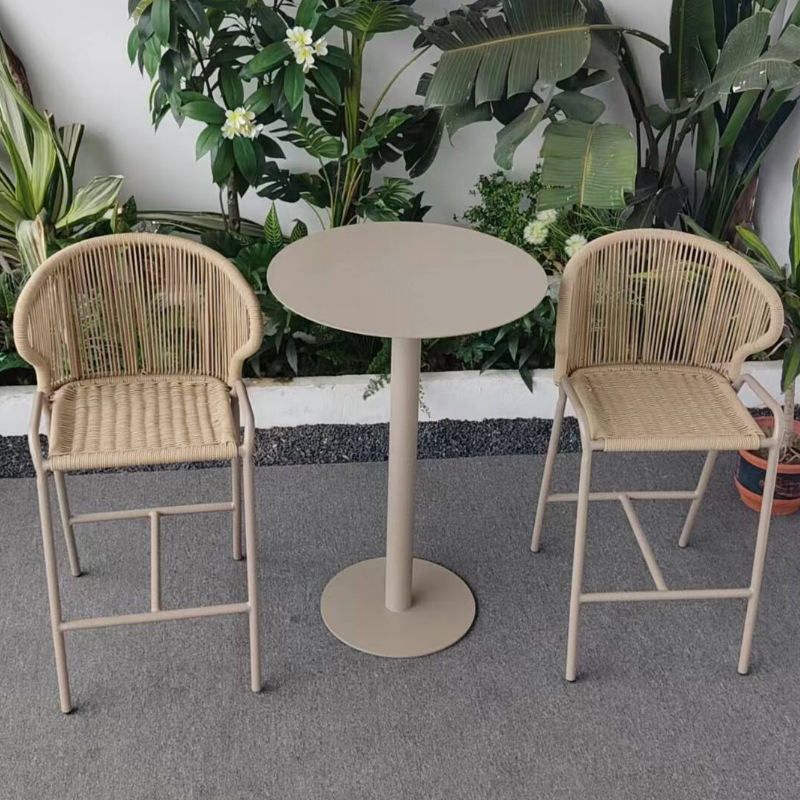
Daily Maintenance Tips for Weatherproof Wicker Outdoor Furniture
Daily Cleaning
- Use a soft brush, sponge, or damp cloth
- Avoid strong acid cleaners
- High pressure washers are not recommended to prevent damage to the weaving
Seasonal Inspection
- Check for loosened or scratched areas
- Clean outdoor cushions thoroughly and let them dry
- Check whether frame connections are secure
Tips for Extending Lifespan
- Use protective covers during rain or long periods of non use
- Avoid heavy impact
- Regularly clean dust from the weave gaps
Outdoor Whale’s Advantages in Weatherproof Wicker Outdoor Furniture
As a factory with over ten years of outdoor furniture manufacturing experience, Outdoor Whale offers advantages such as:
- HDPE wicker combined with high strength aluminum frames for maximum durability
- Two factories totaling 28,000㎡ for high efficiency and reliable lead times
- International production standards including SGS and AQL certifications
- Professional design team providing optimized layouts based on floor plans
- Serving global B2B markets including brands, retailers, and project clients
Outdoor Whale is not just a furniture manufacturer; we create complete outdoor space solutions for our customers.
Conclusion
Whether you are a homeowner, villa owner, or commercial space operator, choosing weatherproof wicker outdoor furniture provides:
- Longer lifespan
- Lower maintenance cost
- More beautiful and comfortable outdoor experiences
If you want a durable, stylish, and truly outdoor ready space, weatherproof wicker furniture is a smart long term investment. Start designing your durable outdoor space with premium weatherproof wicker furniture today — contact us at info@ligointl.com
FAQ
Q1: Is wicker waterproof?
Yes, PE and HDPE wicker furniture is water-resistant and suitable for long-term outdoor use. Natural rattan is not.
Q2: How long does weatherproof wicker outdoor furniture last?
High-quality HDPE wicker furniture with aluminum frames can last 5–10 years outdoors with proper maintenance.
Q3: Can outdoor wicker furniture be left in rain?
Yes, but using protective covers during prolonged rain or non-use is recommended to extend lifespan.
Q4: How should I maintain outdoor wicker furniture?
Clean with soft brushes or damp cloths, avoid harsh chemicals, inspect frames and cushions seasonally, and protect with covers.
Q5: Why is HDPE wicker better than natural rattan?
HDPE wicker is UV-resistant, waterproof, mold-resistant, and highly durable, whereas natural rattan absorbs water, fades, and is prone to cracking outdoors.
Outdoor spaces are gaining more attention. Whether it is a home garden, a café terrace, or a commercial landscape area, furniture that resists sun damage, lasts long, and keeps a stable appearance is essential. Among the options, UV resistant outdoor furniture is becoming mainstream because it effectively prevents fading, aging, and cracking caused by sunlight, keeping outdoor areas attractive and practical for a long time.
This guide covers materials, production processes, and buying tips. It helps you make the best choice when creating an outdoor space.
What is UV Resistant Outdoor Furniture?
UV resistant outdoor furniture refers to furniture that gains stronger UV resistance through materials, processes, or surface treatments. This furniture can resist fading, embrittlement, and structural weakening caused by sunlight.
How UV damages outdoor furniture
Long-term sun exposure causes:
- Color fading
- Surface cracking or deformation
- Material aging and strength loss
- Fabric hardening or brittleness
These are the main reasons many outdoor furniture items age quickly.
How furniture achieves UV resistance
Furniture achieves UV resistance typically by:
- Using outdoor-grade materials such as outdoor-grade PE, PP rope, and powder-coated aluminum
- Adding UV stabilizers or color masterbatch
- Using outdoor fabrics with UV protection
- Applying powder coatings on metal surfaces
These are the professional process standards that Outdoor Whale adheres to.
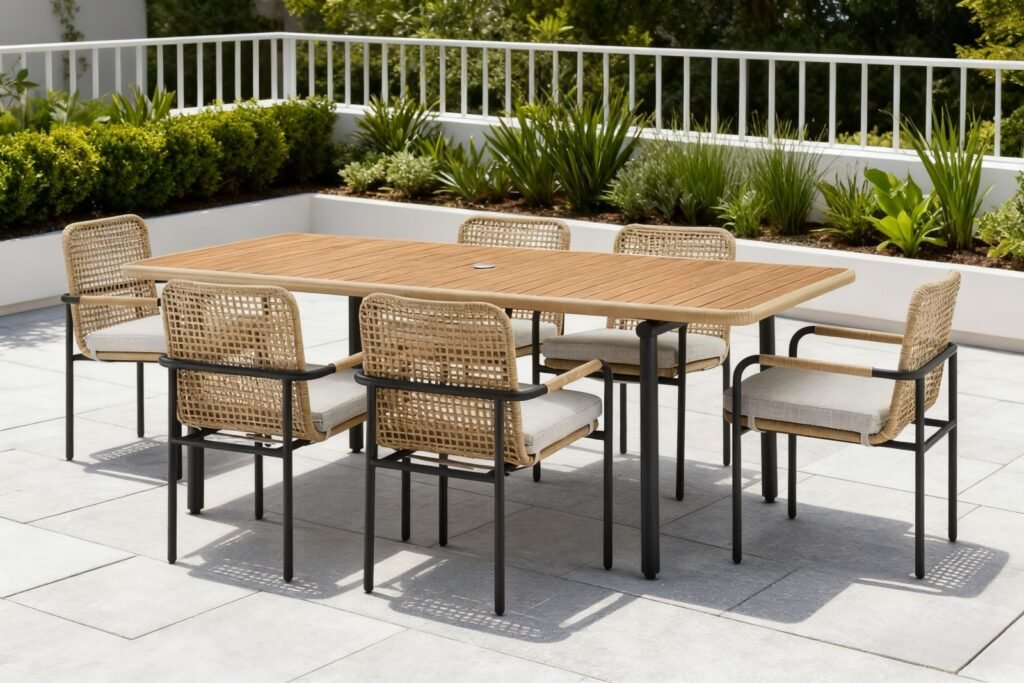
Why Choose UV Resistant Outdoor Furniture?
Choosing UV resistant outdoor furniture significantly increases the long-term value of outdoor spaces.
Prevents fading and discoloration
High heat and UV make ordinary furniture lose color quickly. Furniture with UV protection keeps color stable.
Extends service life
Less aging and embrittlement means a longer service life.
Reduces maintenance costs
Being less prone to damage and weathering lowers the need for frequent repair or replacement.
Keeps visual appeal
Even under strong sunlight, furniture can retain its original texture and appearance.
Common Materials for UV Resistant Outdoor Furniture
Below are the most used and reliable weather-resistant materials in outdoor furniture. We explain them based on industry practice and Outdoor Whale’s production experience.
| Material type | UV performance | Advantages | Common use |
|---|---|---|---|
| PE Rattan | High | Masterbatch plus UV additives. Long outdoor use | Wicker sofas, dining chairs |
| PP Outdoor Rope | High | UV and moisture resistant. Not easy to loosen | Rope furniture, lounge chairs |
| Powder-Coated Aluminum | High | Does not rust. Does not fade. Strong structure | Frames, tables, chairs |
| Outdoor Fabric (such as solution-dyed fabric) | High | Color penetrates fibers. Not easy to fade | Cushions, pillows |
PE Rattan (outdoor-grade PE rattan)
One of the most widely used materials for outdoor use.
Outdoor Whale’s PE rattan contains:
- High density outdoor-grade raw material
- UV resistant masterbatch
- Weather resistant additives
These features enable wicker furniture to remain unfaded under sunlight for years.
PP Rope (outdoor rope)
Rope furniture is popular because it is:
- UV resistant
- Water resistant
- Not easy to loosen
- Visually modern
Our factory uses outdoor-grade fiber rope suitable for high UV environments.
Powder-Coated Aluminum
Powder coating offers:
- Multi-layer protection
- UV resistance and color stability
- Corrosion resistance
It is the ideal structural material for hotel and poolside furniture.
Outdoor Fabrics
Solution-dyed outdoor fabrics provide:
- Color that penetrates fiber core
- UV protection
- Water and mildew resistance
They are the best choice for cushions and throw pillows.
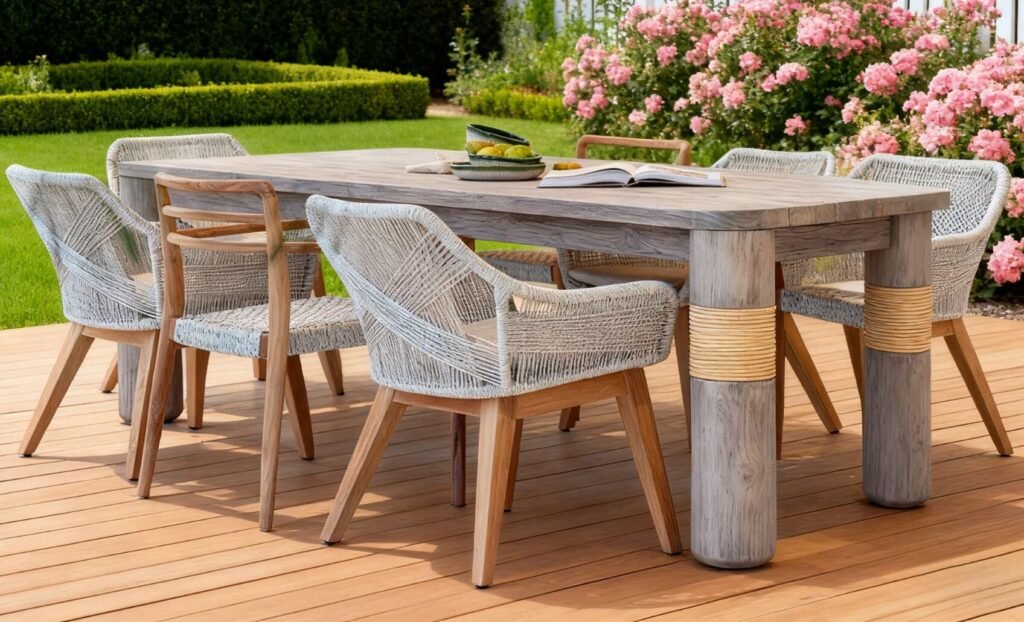
How Manufacturers Improve UV Resistance of Outdoor Furniture
From material selection to production process, every step affects UV performance.
UV testing process
High-quality furniture undergoes tests such as:
- Sunlight simulation aging tests
- Fading level tests
- Comparative weather resistance tests
Outdoor Whale conducts regular spot checks in its production process to ensure stable durability.
Surface treatment processes
- Metals use high-strength powder coating
- Plastics are compounded with UV stabilizers
- Fabrics are selected from outdoor-grade textiles
Material formulation optimization
We collaborate with material suppliers to adjust UV stabilizer formulas for different climates, such as the Middle East, Australia, and Southeast Asia.
These processes reflect Outdoor Whale’s professionalism and mature production capability.
Design Tips for Creating a Sun-proof Outdoor Space
Even with UV resistant outdoor furniture, reasonable layout can further enhance longevity.
Create shaded areas
Use outdoor umbrellas, pergolas, or canopies to reduce direct sunlight.
Arrange furniture according to sun direction
Avoid placing fabric-heavy pieces in areas with direct all-day sun.
Choose light colored furniture to reduce heat absorption
Lighter colors absorb less heat and age more slowly under sunlight.
How to Maintain Your UV Resistant Outdoor Furniture
High quality does not mean zero maintenance. Simple care extends service life significantly.
Regular cleaning
Use mild soapy water to care for rattan, aluminum, and other materials.
Protect during extreme weather
Move furniture indoors or use protective covers during strong wind or heavy rain.
Inspect fabrics regularly
Replace cushion covers or pillow covers according to usage frequency.
Key Points When Buying UV Resistant Outdoor Furniture
When you are ready to purchase, pay attention to the following factors:
Choose outdoor-grade certified materials
Like PE rattan, PP rope, and powder-coated aluminum.
Check frame construction
Good welding and thicker walls improve stability.
Prefer solution-dyed outdoor fabrics
They resist fading better than ordinary fabrics.
Evaluate the manufacturer’s professionalism
Check if the factory has proper equipment, testing capabilities, and project experience.
Why Choose Outdoor Whale?
With more than a decade of experience, we do more than manufacture furniture. We provide full design and space planning support.
Professional material selection and UV protection technology
- All PE rattan, PP rope, aluminum and fabrics are outdoor-grade
- In-house factories ensure stable quality
Advanced production capabilities
- In-house metal cutting, welding, weaving and upholstery
- High standard powder coating technology
Strict quality control process
- Incoming material testing
- Aging and weather resistance spot checks
- Multiple inspections for finished products
Space design capability that is rare in the industry
Based on customer floor plans we provide:
- Furniture layout proposals
- Space style planning
- Product matching suggestions
This makes Outdoor Whale not only a manufacturer but also a partner that understands engineering and design.
Conclusion
Choosing high-quality UV resistant outdoor furniture is key to building durable, attractive and long-term stable outdoor spaces. Whether for home or commercial use, premium materials and reliable processes greatly improve furniture life and appearance.
Outdoor Whale continues to use professional manufacturing and space design experience to help clients create more comfortable, durable and appealing outdoor environments. Email: info@ligointl.com
When choosing outdoor furniture, materials matter just as much as design. Among the many options available, engineered wood furniture and solid wood patio furniture are two popular choices — but they behave very differently outdoors. Understanding their structure, durability, and performance in open-air environments can help homeowners, contractors, and hospitality projects make smarter decisions.
This guide explains the differences between engineered wood and solid wood specifically in outdoor applications, evaluates their strengths and limitations, and offers professional recommendations for long-term outdoor living.
Quick Answer: Engineered Wood or Solid Wood for Outdoor Furniture?
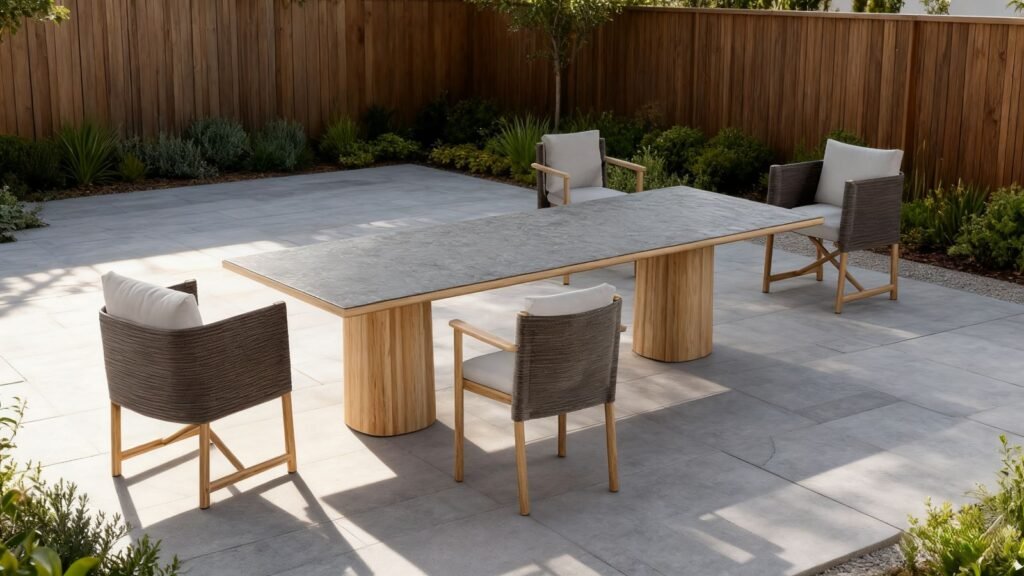
Solid wood furniture performs significantly better outdoors than engineered wood.
Natural hardwoods like teak, acacia, and eucalyptus offer superior resistance to moisture, UV exposure, and temperature changes. Engineered wood, while cost-effective indoors, struggles in outdoor environments due to swelling, delamination, and adhesive breakdown.
1. What Is Engineered Wood in Furniture?
Engineered wood refers to boards made by compressing and bonding wood fibers, veneers, or particles with adhesives. Common types include plywood, MDF, OSB, and particleboard. These materials are widely used in indoor furniture because they are stable, cost-effective, and shape-friendly.
How Engineered Wood Performs Outdoors
Although engineered wood offers many advantages indoors, outdoor conditions challenge its structural integrity:
- Moisture exposure causes swelling, warping, and delamination.
- High humidity weakens glue bonds over time.
- Repeated wet–dry cycles reduce strength.
- UV exposure damages the outer surface faster than natural wood.
For these reasons, engineered wood is usually not recommended for long-term outdoor furniture unless extensively protected or placed in fully covered areas.
2. What Is Solid Wood and Why It Is Popular in Outdoor Furniture
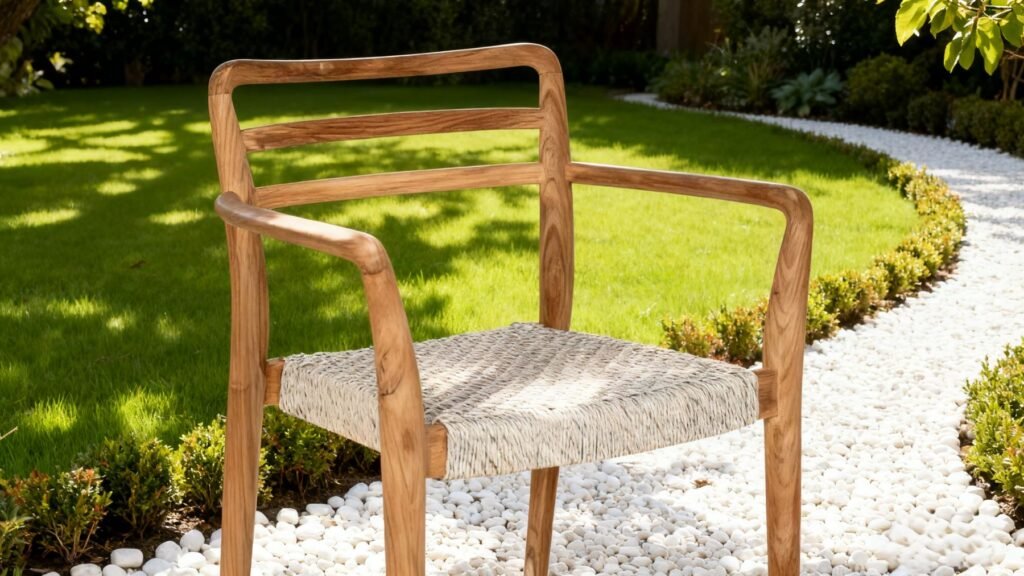
Solid wood patio furniture is made from natural wood boards that retain their original grain and structure. In outdoor environments, certain hardwoods perform particularly well because they naturally resist moisture, insects, and decay.
Woods Commonly Used for Outdoor Furniture
| Wood Type | Weather Resistance | Maintenance Needs | Typical Outdoor Use |
|---|---|---|---|
| Teak | Excellent | Low | High-end patio sets, resorts |
| Acacia | Good | Medium | Home patios, cafés |
| Eucalyptus | Good | Medium | Garden furniture |
| Ipe | Excellent | Low | Public spaces, decks |
These hardwoods contain natural oils and dense fibers, allowing them to withstand outdoor conditions significantly better than engineered wood.
3. Engineered Wood vs Solid Wood: Outdoor Performance Comparison
| Feature | Engineered Wood Furniture | Solid Wood Furniture |
|---|---|---|
| Outdoor Suitability | ❌ Limited | ✔ Excellent |
| Moisture Resistance | Low | High |
| UV Resistance | Low | Medium–High |
| Structural Stability | Weak when wet | Naturally stable |
| Maintenance Needs | High | Medium–Low |
| Outdoor Lifespan | 1–3 years | 10–25 years |
| Best Use | Indoor / covered areas | Patios, gardens, resorts |
4. Is Engineered Wood Suitable for Outdoor Furniture?
In most cases, engineered wood is not suitable for outdoor furniture.
Although surface sealing may delay moisture penetration, water eventually reaches the core layers. Once this happens, swelling and internal separation occur, and repairs become difficult or impossible. Even marine-grade plywood requires heavy protection and is best limited to semi-covered outdoor spaces.
For permanent outdoor seating, dining tables, and loungers, engineered wood presents a high risk of early failure.
5. Why Solid Wood Performs Better Outdoors
Solid wood’s natural advantages make it ideal for outdoor use:
- Natural oils repel moisture and insects
- Dense grain resists warping and cracking
- Structural integrity remains intact even after years outdoors
- Surfaces can be refinished rather than replaced
These qualities explain why solid wood furniture is widely used in outdoor hospitality, luxury residences, and long-term commercial projects.
6. Cost vs Longevity: Which Material Is More Cost-Effective?
Although engineered wood often costs less upfront, its short outdoor lifespan reduces long-term value.
Solid wood requires higher initial investment but offers significantly better durability, making it more cost-effective for outdoor applications.
Many commercial projects—hotels, resorts, restaurants, and real estate developments—prefer solid wood because it stays beautiful and functional for years with minimal upkeep.
7. Which One Should You Choose for Outdoor Furniture?
Choose Engineered Wood If:
- It will be placed in a fully covered or indoor–outdoor transitional area.
- You need a temporary, low-cost solution.
- Moisture exposure is very limited.
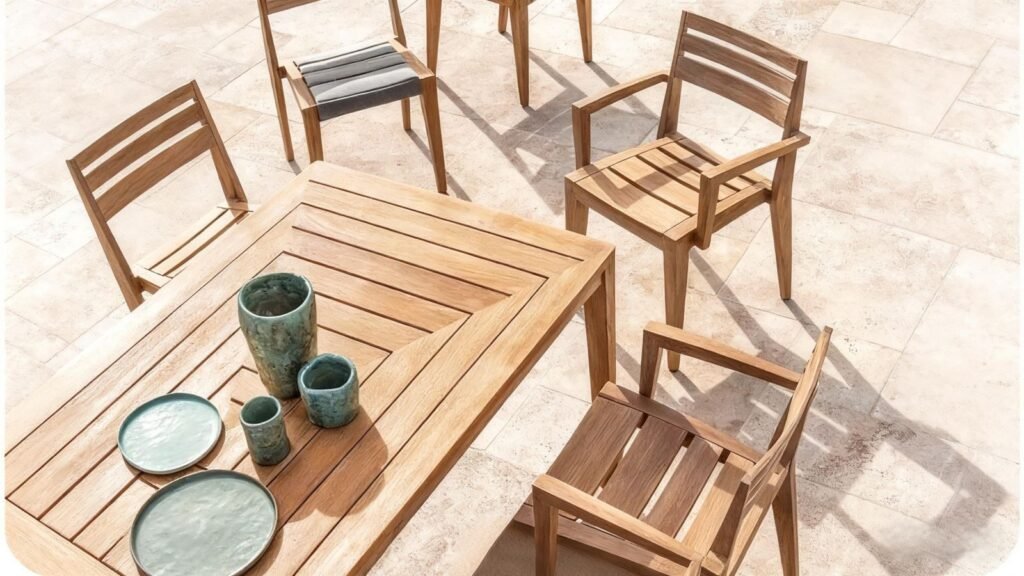
Choose Solid Wood Patio Furniture If:
- Durability and weather resistance are your top priorities.
- You want a natural, premium outdoor aesthetic.
- The furniture will be exposed to rain, sunlight, or humidity.
- You are furnishing long-term outdoor commercial projects.
For true outdoor environments, solid wood patio furniture is overwhelmingly the better choice.
8. Outdoor Whale’s Professional Recommendation
As a dedicated outdoor furniture manufacturer, Outdoor Whale focuses on materials that deliver long-term performance in real outdoor settings.
We recommend solid hardwoods—such as teak and acacia—for clients seeking durability, natural beauty, and minimal maintenance.
Our team evaluates usage scenarios, climate conditions, and aesthetic preferences to help global partners select the right material for their project.
If you want outdoor furniture that lasts, performs, and elevates your outdoor space, solid wood remains the most reliable and premium option. Email: info@ligointl.com
FAQ
Can engineered wood furniture be used outdoors?
Only in fully covered areas. Direct exposure significantly shortens lifespan.
Which lasts longer outdoors, engineered wood or solid wood?
Solid wood lasts much longer, often 10 to 25 years with proper care.
Is solid wood patio furniture worth the higher cost?
Yes. Its durability and long service life make it more cost-effective over time.
Does engineered wood handle humidity well?
No. High humidity weakens adhesives and causes internal swelling.
In recent years, eucalyptus wood furniture has gained popularity for its affordability and availability. But when it comes to eucalyptus patio furniture durability or eucalyptus outdoor furniture durability, homeowners often ask: is eucalyptus wood good for outdoor furniture?
This article takes a closer, data-driven look at the material’s core characteristics, durability, and best-use scenarios—helping you decide whether eucalyptus is the right choice for your outdoor setup.
1. Understanding the Characteristics of Eucalyptus Wood
Eucalyptus is a broad genus under the Myrtaceae family, native to Australia but now cultivated across tropical and subtropical regions, including South China, Brazil, and Africa. More than 700 species exist, but the most common types used in furniture include Red Grandis, Blue Gum (Eucalyptus globulus), and Lemon Eucalyptus.
Eucalyptus Wood Furniture Lifespan and Durability
The lifespan of eucalyptus wood furniture largely depends on species, drying process, and protective finishes. Properly kiln-dried eucalyptus, sealed with outdoor-grade finishes, can achieve 5–7 years of durability outdoors. Regular maintenance further extends its life, making it a viable choice for decorative or lightweight outdoor furniture.
Eucalyptus Wood Furniture Key Properties
- Rapid Growth – Eucalyptus trees mature in just 5–10 years, making them one of the fastest-growing hardwood species.
- Density & Hardness – The density varies by species. For example, Blue Gum averages about 820 kg/m³ (51 lb/ft³) in dry weight with a Janka hardness of 2,370 lbf, and a modulus of rupture (MOR) of 134.7 MPa (The Wood Database).
- Texture & Color – Eucalyptus typically features straight or slightly wavy grain patterns with reddish-brown tones.
- Dimensional Stability – Because it grows quickly, the wood fibers are relatively loose, which makes it prone to cracking or warping if not properly dried.

2. Classification and Quality Ranking
| Category | Typical Wood Types | Main Features |
|---|---|---|
| High-end hardwoods | Teak, Oak, Walnut | Exceptional durability, high density, elegant grain, long lifespan |
| Mid-range hardwoods | Ash, Beech, Elm | Balanced performance, moderate cost |
| Economical hardwoods | Pine, Poplar, Eucalyptus | Low cost, light density, less stable under extreme weather |
Eucalyptus wood typically belongs to the low-cost hardwood category. While affordable and sustainable, it cannot compete with high-end hardwoods in long-term stability or moisture resistance, especially when exposed to harsh outdoor environments.
3. Durability and Limitations
While some eucalyptus species show decent hardness, the material as a whole has several drawbacks when used outdoors:
- Limited Structural Strength:
Lower-density eucalyptus species may dent or deform under pressure, making them less ideal for weight-bearing furniture like bed frames or benches. - Warping and Cracking:
Due to its high moisture content and natural shrinkage rates—radial 6.8%, tangential 12.8%—the wood can warp or split in environments with extreme humidity changes. - Ordinary Aesthetics:
Though its texture is decent, eucalyptus lacks the depth and luster found in premium woods like walnut or teak. Many manufacturers use stains or veneers to enhance its look, which may reduce eco-friendliness. - Scent and VOCs:
Certain eucalyptus species, like Lemon Eucalyptus, release a distinct aroma. Combined with industrial adhesives or chemical finishes, this can contribute to volatile organic compounds (VOCs) that affect indoor air quality.
4. Data-Backed Performance: Not All Eucalyptus Is the Same
Some engineered eucalyptus hybrids show improved performance. For example, Lyptus® wood—a hybrid of Eucalyptus grandis and Eucalyptus urophylla—offers higher density and stability, making it more suitable for furniture requiring greater strength (The Wood Database).
This indicates that not all eucalyptus wood is weak—the performance largely depends on the species, drying process, and protective finishing applied during manufacturing.
5. When Is Eucalyptus Wood a Good Choice?
Despite its weaknesses, eucalyptus can be a practical option for specific scenarios:
- Short-term or rental furniture where longevity is less critical
- Children’s furniture or lightweight indoor decor
- Decorative outdoor pieces that are not directly exposed to rain or sunlight
When properly kiln-dried and sealed with outdoor-grade finishes, eucalyptus wood can last up to 5–7 years outdoors, as suggested by tests from multiple forestry studies (FAO Forestry Paper 151).
6. Eucalyptus vs Teak for Outdoor Furniture
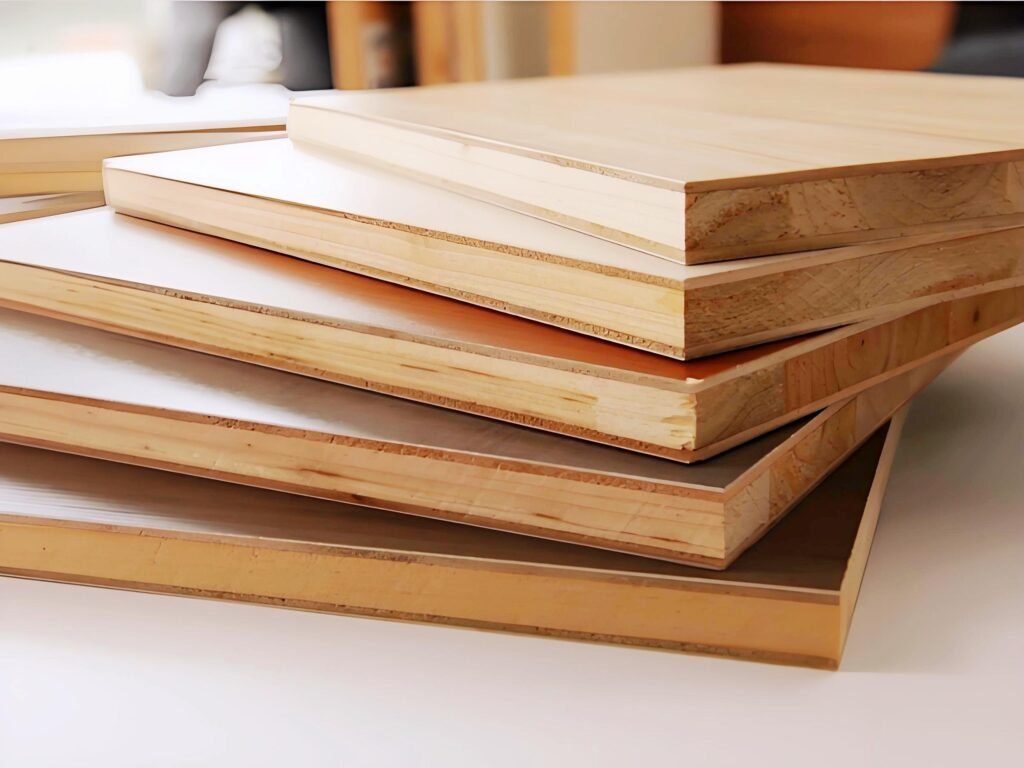
While teak offers superior water resistance, longevity, and minimal maintenance, eucalyptus is lighter, more affordable, and sustainable. For long-term outdoor use, teak may be preferred. However, eucalyptus is suitable for decorative pieces, short-term outdoor setups, or budget-conscious projects.
Other alternatives include acacia and oak, which provide better stability and durability while remaining cost-effective.
7. Best Alternatives to Eucalyptus
If you’re seeking longer-lasting and more stable materials, consider these alternatives:
| Wood Type | Benefits |
|---|---|
| Teak | Naturally water-resistant, highly durable, and requires minimal maintenance |
| Acacia | Budget-friendly, attractive grain, good resistance to moisture |
| Oak | Excellent structural integrity and beautiful texture for high-end furniture |
These options may require higher upfront costs, but they offer superior longevity and overall value.
8. Final Verdict
“Is eucalyptus wood good for outdoor furniture?” Yes — under proper care, but not for every condition.
If you only need furniture that is economical, decorative, or for short-term use, eucalyptus wood may be sufficient; But if you pursue long-term durability, structural strength, and aesthetics, you should consider higher grade hardwood.
At Outdoor Whale, we take these challenges seriously. With years of expertise in outdoor furniture, we use strict material selection and advanced finishing to guarantee lasting strength and elegance.
Reach out to Outdoor Whale — your trusted partner for premium outdoor furniture solutions.
FAQ
Q1: Is eucalyptus a good wood for outdoor furniture?
Yes, eucalyptus can be suitable for outdoor furniture if properly dried, sealed, and maintained, though it doesn’t match the durability of teak.
Q2: How long does eucalyptus wood furniture last outdoors?
With proper finishing and protection, eucalyptus furniture can last 5–7 years outdoors.
Q3: How does eucalyptus compare to teak for patio furniture?
Teak has superior moisture resistance and longevity. Eucalyptus is more affordable and sustainable but less stable in extreme outdoor conditions.
Q4: How can I improve the durability of eucalyptus patio furniture?
Apply outdoor-grade sealants, avoid prolonged exposure to rain or direct sunlight, and clean gently to prevent cracking or warping.
Q5: Is eucalyptus wood furniture eco-friendly?
Yes, eucalyptus is fast-growing and renewable, making it a sustainable option for environmentally conscious outdoor furniture.
A huge coffee table is often the centerpiece of a living room, serving both functional and aesthetic purposes. DIY allows you to:
- Fully customize the size, materials, and design style
- Incorporate your personal creativity into your furniture
- Save costs while achieving high-quality results
According to Statista 2024 DIY furniture market report, the global DIY furniture market reached $15.5 billion, with an annual growth rate of 5.2% (Source: Statista).
Pinterest and Houzz data also show that searches for “DIY coffee table” have steadily increased over the past two years, reflecting growing interest in creating personalized coffee tables.
1. Planning Your Huge Coffee Table: Size and Style
1.1 Define Purpose and Size
Determine where and how your huge coffee table will be used:
- Home Use: Relaxation, tea service, display
- Commercial Spaces: Cafés, hotel lobbies, lounge areas
Recommended dimensions:
| Type | Size Range | Suitable Space |
|---|---|---|
| Round | 120–150 cm diameter | Small living rooms or patios |
| Rectangular | 150–180 cm length, 70–90 cm width | Medium to large living rooms or commercial spaces |
Tip: Leave at least 45–60 cm around the table for comfortable movement.
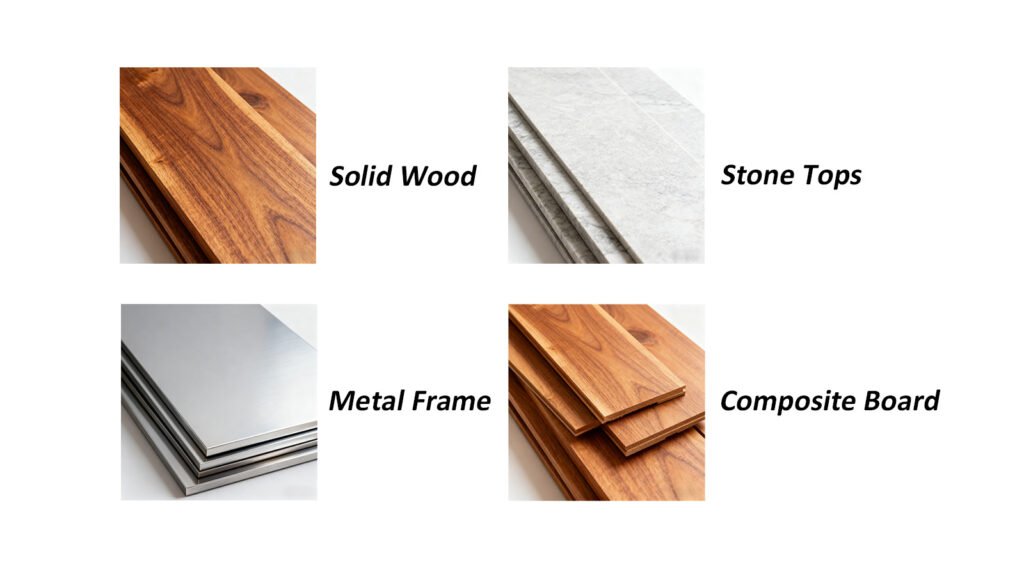
1.2 Material Selection
Choose materials based on durability, weight, and aesthetics:
- Solid Wood (Oak, Walnut): Strong, natural grain, long-lasting
- Plywood/Composite Board: Cost-effective, easy to handle for DIY beginners
- Metal Frame (Aluminum, Iron): Sturdy, pairs well with wooden or glass tops
- Marble or Stone Tops: Luxurious look but heavy; handle with care
1.3 Design Style
Pick a style that complements your space:
- Modern Minimalist: Straight or slightly curved lines, clean appearance
- Nordic/Scandinavian: Light wood and natural textures
- Casual/Resort Style: Natural textures and colors for a relaxed vibe
Reference: Architectural Digest 2024 Furniture Design Trends.
2. Materials and Tools Checklist
| Material/Tool | Purpose | Recommendation |
|---|---|---|
| Solid Wood or Plywood | Tabletop and legs | ≥2cm thick, Oak or Pine |
| Electric Drill & Screwdriver | Assembly | Drill bits 3–6mm |
| Sandpaper & Sanding Tools | Smooth edges | Coarse to fine (120–400 grit) |
| Waterproof/Low-VOC Paint | Protection against moisture and scratches | Environmentally friendly finish |
| Angle Brackets/Support Rods | Reinforce legs | Stainless steel or powder-coated metal |
| Measuring Tape & Pencil | Accurate measurement | Ensure tabletop and frame are level |
Tip: Sketch your design on paper first with exact dimensions to minimize material waste.
3. Step-by-Step DIY Instructions
Step 1: Build the Base Frame
- Use wooden beams or metal tubing to construct a sturdy foundation
- Reinforce corners with angle brackets or support rods
- Ensure the base is level to prevent wobbling
Step 2: Install the Tabletop
- Secure the wood or chosen material onto the base
- Use strong screws or brackets to ensure stability
- Optional: Include a storage compartment or shelf underneath for added functionality
Step 3: Sanding the Surface and Edges
- Start with coarse sandpaper, finish with fine grit for smoothness
- Round off edges and corners for safety
- Wipe off dust with a damp cloth before painting
Step 4: Painting and Protective Finish
- Apply at least two to three coats of waterproof or clear paint
- Allow 24 hours drying time between coats
- Choose matte or semi-gloss finish based on style preference
Step 5: Final Details
- Optional: Add decorative patterns, inlays, or surface textures
- Spray or powder-coat metal frames for extra durability
- Test stability and make sure all connections are secure
4. Safety and Maintenance Tips
- Moisture Protection: Avoid prolonged exposure of untreated wood to damp conditions
- Scratch Prevention: Use a glass tabletop protector or mats
- Periodic Check: Inspect screws and brackets every 6 months
- Routine Care: Oil wooden surfaces annually to maintain gloss and prolong life
5. From DIY to Custom Design: Outdoor Whale Can Make It Professional
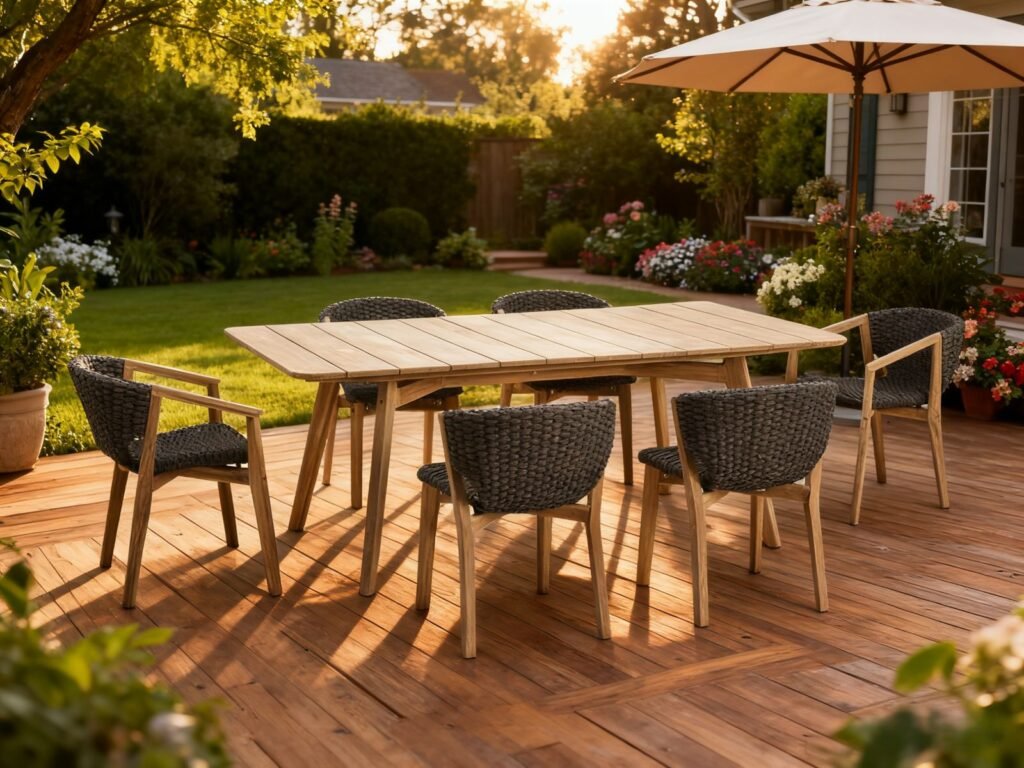
DIY is a great way to explore your creativity, but professional customization ensures your huge coffee table is durable, precise, and perfectly suited for your space.
Outdoor Whale offers:
- Personalized Design: We bring your sketches, floor plans, or ideas to life
- Professional Manufacturing: Over 10 years of experience in outdoor furniture production
- Quality Assurance: SGS and AQL certified for durability and safety
- Premium Craftsmanship: Solid wood, metal frames, and custom finishes tailored to your design
6. Conclusion
At Outdoor Whale, we transform your ideas into reality. Whether you have a hand-drawn sketch, a detailed floor plan, or just a creative vision, our expert design team can bring it to life. We specialize in custom-made furniture solutions, helping clients create pieces that perfectly match their brand identity, space layout, and aesthetic goals.
Our designers will collaborate with you to optimize every detail — from materials and dimensions to color combinations and woven textures. With over a decade of manufacturing experience and internationally certified quality standards such as SGS and AQL, Outdoor Whale ensures that every product we build reflects both style and structural excellence.
👉 Turn your DIY dreams into professional designs.
Partner with Outdoor Whale today to create exclusive, custom-built furniture that enhances your brand’s unique outdoor experience.
In recent years, outdoor living spaces have evolved from simple patios into vital extensions of the home — spaces for connection, relaxation, and style. This shift has reshaped outdoor furniture design, moving away from rigid lines toward more organic, inviting forms.
Among the emerging favorites is curved sectional furniture, celebrated for its soft silhouettes and ability to foster social interaction. According to Grand View Research, the global outdoor furniture market is projected to grow at a CAGR of 6.3% from 2025 to 2033, signaling continuous demand for innovation and comfort in outdoor living (grandviewresearch.com).
At the same time, woven rope outdoor furniture is making waves for its natural texture and weather-resistant materials — bringing craftsmanship and tactile warmth back to modern outdoor spaces.
1. Why Curved Sectional Furniture Is Gaining Popularity
1.1 What Is Curved Sectional Furniture?
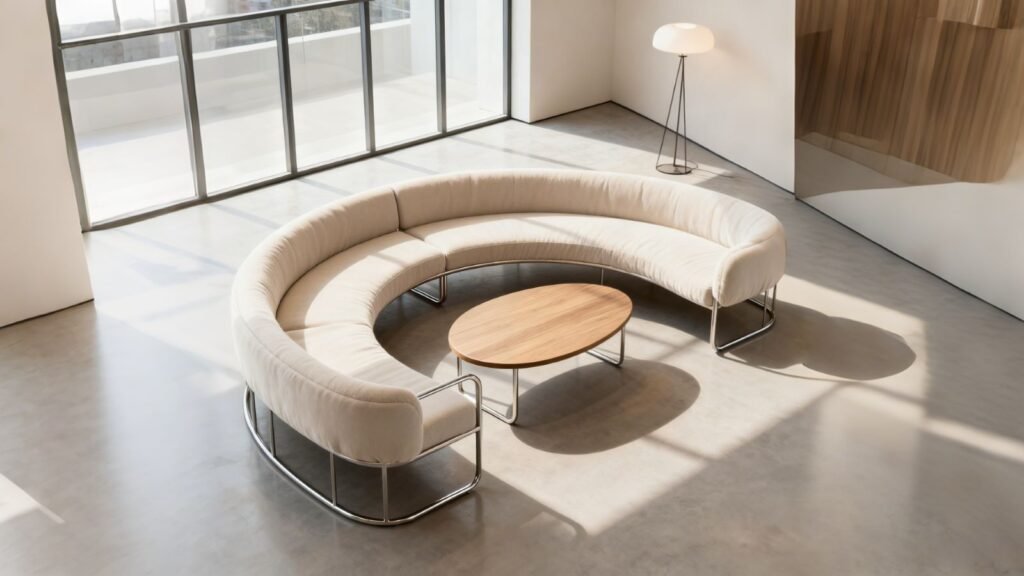
A sectional refers to modular seating that can be rearranged into various configurations. When designed with curves, it creates a flowing, circular form rather than sharp angles. Design experts identify soft curves as one of the key furniture trends redefining modern interiors.
1.2 Spatial and Social Advantages
- Enhances interaction: The curved layout naturally encourages conversation and connection.
- Improves flow: Unlike rectangular seating, curves eliminate hard visual breaks, making the space appear more open and harmonious.
- Search data support: Global search interest in “curved chairs” surged in 2024–2025, peaking at an index of 88 (Accio), indicating strong and growing consumer demand.
- Space adaptability: Curved sectional furniture fits irregular patios, pool edges, and garden corners, maximizing both functionality and aesthetics.
| Time | Curved Sofas | Curved Tables | Curved Chairs |
|---|---|---|---|
| Jun 2024 | Approx. 50 | Approx. 35 | Approx. 70 |
| Jul 2024 | Approx. 0 | Approx. 0 | Approx. 75 |
| Aug 2024 | Approx. 40 | Approx. 0 | Approx. 75 |
| Sep 2024 | Approx. 40 | Approx. 35 | Approx. 80 |
| Oct 2024 | Approx. 35 | Approx. 25 | Approx. 60 |
| Nov 2024 | Approx. 35 | Approx. 35 | Approx. 75 |
| Dec 2024 | Approx. 35 | Approx. 40 | Approx. 80 |
| Jan 2025 | Approx. 35 | Approx. 40 | Approx. 80 |
| Feb 2025 | Approx. 60 | Approx. 0 | Approx. 75 |
| Mar 2025 | Approx. 35 | Approx. 40 | Approx. 80 |
| Apr 2025 | Approx. 40 | Approx. 50 | Approx. 90 |
| May 2025 | Approx. 35 | Approx. 20 | Approx. 85 |
| Jun 2025 | Approx. 40 | Approx. 35 | Approx. 90 |
1.3 Aligned With Modern Lifestyles
As the “indoor-outdoor living” concept rises, more homeowners and hospitality developers see outdoor areas as essential living zones. In 2023, the North American outdoor furniture market reached USD 16.57 billion, with an expected CAGR of 5.8% through 2030 (grandviewresearch.com).
This aligns perfectly with what curved sectional furniture represents — warmth, openness, and connection — making it a perfect fit for villas, resorts, cafés, and communal leisure areas.
2. Curved Outdoor Furniture: Versatility Beyond Sofas
When discussing curved outdoor furniture, we’re referring to all outdoor pieces featuring arcs, waves, or organic forms — not just sectionals.
Industry reports highlight “rounded geometries” as a key direction in furniture design for 2025–2026.
For commercial projects like resorts, restaurants, or boutique hotels, curved outdoor furniture not only enhances the aesthetic but also creates focal points for guest interaction and photo opportunities — adding tangible branding and experiential value.
3. The Rise of Woven Rope Outdoor Furniture
3.1 Material and Craftsmanship Innovation
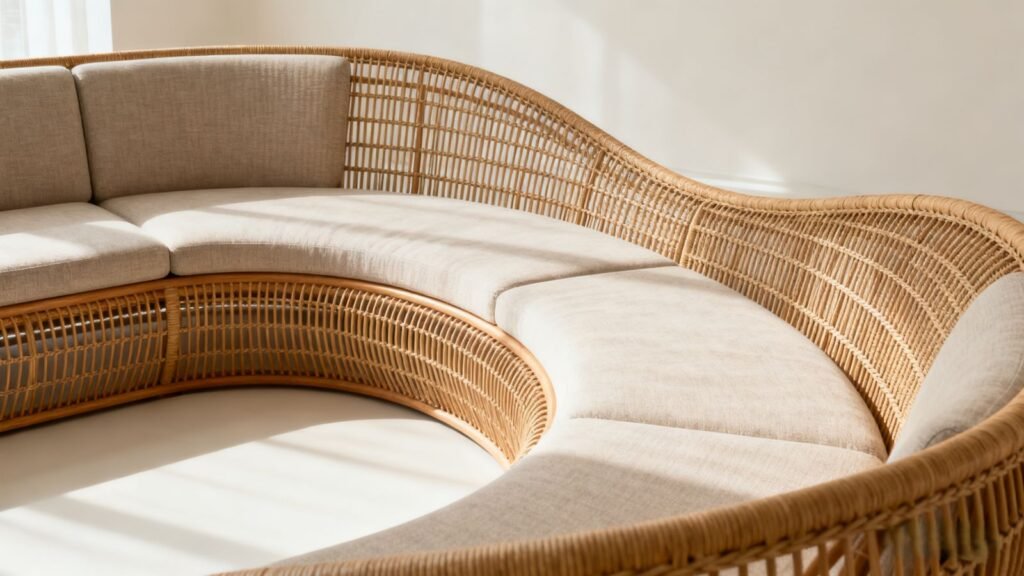
Woven rope outdoor furniture refers to the use of durable synthetic ropes — such as PE or olefin rope — woven into chairs, sofas, and loungers.
Its growing appeal comes from:
- Excellent resistance to UV, humidity, and corrosion.
- Airy and lightweight aesthetics.
- Hand-crafted texture that conveys warmth and sophistication, aligning with the global “natural touch” design movement.
3.2 Why the Market Is Shifting Back to Textural Design
With the global outdoor furniture market projected to reach USD 86.65 billion by 2033 at a 6.3% CAGR (grandviewresearch.com), manufacturers are differentiating through materials and surface texture.
Design analysts also emphasize textural composition and craftsmanship appeal as hallmarks of luxury furniture. Thus, woven rope outdoor furniture meets both functional and emotional needs — delivering durability and sensory satisfaction to end-users and B2B clients alike.
4. When Curves Meet Weaving: A Perfect Fusion of Design and Comfort
High-end outdoor design increasingly merges curved frameworks with woven rope craftsmanship.
For example, a curved sectional furniture piece with an aluminum frame and woven rope backrest offers the best of both worlds: organic flow and tactile elegance.
This combination elevates not just comfort but also visual impact — ideal for poolside lounges, resort terraces, and private gardens.
However, achieving precision in curvature and rope tension demands advanced manufacturing — a hallmark of trusted producers like Outdoor Whale, where every curve and weave is engineered for durability and beauty.
5. What Manufacturing Quality Reveals About Brand Credibility
Choosing curved sectional furniture or woven rope outdoor furniture is also about choosing a reliable manufacturer. A credible outdoor furniture producer should demonstrate:
- Advanced facilities: Precision aluminum bending, rope weaving, and powder-coating technology.
- Premium materials: Weather-resistant aluminum, UV-proof rope, fade-resistant fabrics.
- Comprehensive quality control: Each piece should pass SGS/AQL tests, UV exposure trials, and corrosion resistance evaluation.
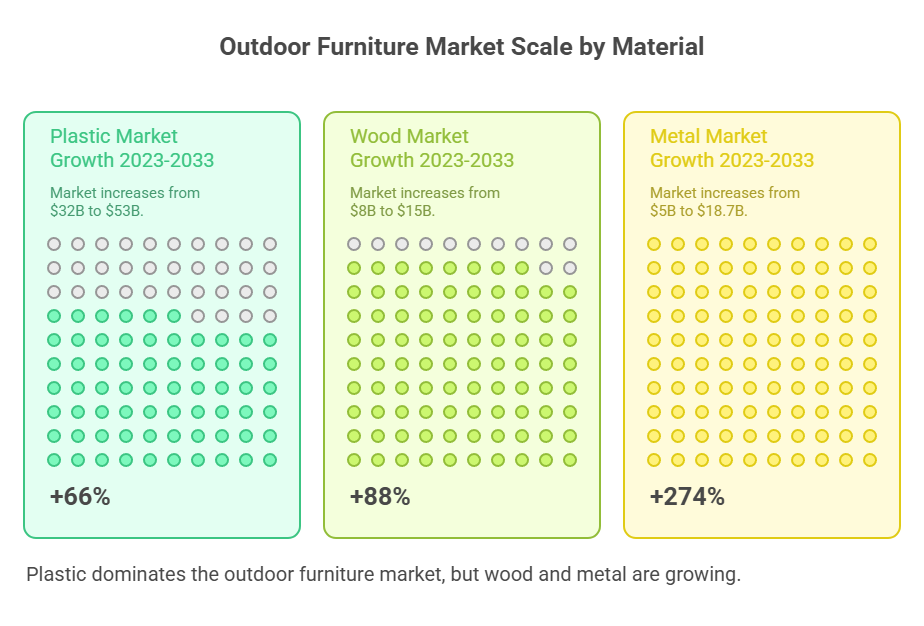
- Market data for context: The global outdoor furniture market was valued at USD 43.19 billion in 2023 and is forecasted to hit USD 72.15 billion by 2033 (CAGR ≈ 5.27%) (sphericalinsights.com).
- Customization capability: The ability to design based on client floor plans — turning concepts into functional, aesthetic outdoor layouts.
These elements together build trust, professionalism, and long-term partnership value.
| Year | Plastic (USD Billion) | Wood (USD Billion) | Metal (USD Billion) | Total Market Size (USD Billion) |
|---|---|---|---|---|
| 2023 | ≈32.0 | ≈6.8 | ≈11.4 | ≈49.2 |
| 2024 | ≈32.0 | ≈7.9 | ≈11.0 | ≈50.9 |
| 2025 | ≈33.0 | ≈7.3 | ≈13.0 | ≈53.3 |
| 2026 | ≈34.0 | ≈7.8 | ≈10.4 | ≈52.2 |
| 2027 | ≈35.0 | ≈8.8 | ≈10.4 | ≈54.2 |
| 2028 | ≈37.0 | ≈9.0 | ≈11.0 | ≈57.0 |
| 2029 | ≈40.0 | ≈12.0 | ≈10.0 | ≈62.0 |
| 2030 | ≈45.0 | ≈10.2 | ≈13.4 | ≈68.6 |
| 2031 | ≈45.0 | ≈14.0 | ≈12.0 | ≈71.0 |
| 2032 | ≈49.0 | ≈15.0 | ≈13.0 | ≈77.0 |
| 2033 | ≈53.0 | ≈16.0 | ≈17.7 | ≈86.7 |
6. A Practical Guide to Choosing Curved or Woven Outdoor Furniture
For B2B buyers, designers, or homeowners seeking to optimize their outdoor space:
- Measure and Plan the Layout
- Analyze your patio or pool area.
- Curved sectional furniture works best in irregular or rounded spaces.
- Prioritize Durability
- Check whether the frame is rust-resistant aluminum or powder-coated steel.
- Ensure woven rope outdoor furniture uses UV-protected, moisture-resistant rope.
- Match Style and Function
- Define your design mood (modern minimalism / resort luxury / natural retreat).
- Curved lines bring elegance; woven textures bring warmth.
- Consider Maintenance
- Outdoor furniture faces sun, rain, and heavy use — invest in brands offering replacement parts and after-sales service.
- Think Project Value
- In commercial spaces, curved and woven pieces elevate ambience and encourage social engagement — creating photo-worthy moments that enhance your brand.
Conclusion: The Future of Outdoor Design Lies in Flow and Texture
The rise of curved sectional furniture and woven rope outdoor furniture signals more than just a design shift — it reflects how people want to live: freely, comfortably, and beautifully.
Curves invite flow and connection; weaving adds tactile richness and craft value.
At Outdoor Whale, we embody this philosophy through every design and production step.
With over a decade of manufacturing excellence, two state-of-the-art factories, and a dedicated design team, we transform spaces into harmonious blends of form and function.
We don’t just create furniture — we create experiences.
Contact info@ligointl.com today to bring your dream outdoor space to life with expertly crafted curved sectional furniture and woven rope outdoor furniture solutions.
Most homeowners live in what’s known as a grade home — practical, affordable, and built with standardized materials.
While these homes are functional, their outdoor spaces often lack the personality and sophistication seen in custom homes.
Here’s the good news: you don’t need a full renovation to achieve a high-end look.
With smart planning and well-designed custom outdoor furniture, your backyard, patio, or balcony can instantly feel like part of a luxury residence.
According to the Houzz 2024 Outdoor Trends Report, 68% of homeowners prioritize furniture customization and lighting upgrades when improving their outdoor areas, as these two elements most effectively elevate both comfort and aesthetics.
1. Understanding the Difference: Grade Home vs. Custom Design
Before upgrading, it’s helpful to understand the key differences between a builder grade home and a custom design home.
| Feature | Builder Grade Home | Custom Design Home |
|---|---|---|
| Materials | Standardized, mass-produced | High-quality, tailored selections |
| Outdoor Space | Basic layout, limited design | Personalized planning, optimized flow |
| Furniture | Off-the-shelf products | Custom outdoor furniture designed for the space |
| Visual Appeal | Functional but plain | Unique, cohesive, and high-end aesthetic |
Understanding these distinctions helps you target the most impactful upgrades without overspending.
2. 15 Ways to Upgrade Your Outdoor Space Like a Custom Home
To make things practical, we’ve divided the ideas into Design Upgrades, Functional Improvements, and Finishing Touches.
A. Design Upgrades
- Create a Defined Lounge Area
Use decking, outdoor rugs, or low platforms to define separate zones for relaxing or entertaining. - Invest in Custom Outdoor Furniture
Custom pieces fit your exact dimensions, enhance comfort, and reflect your design taste.
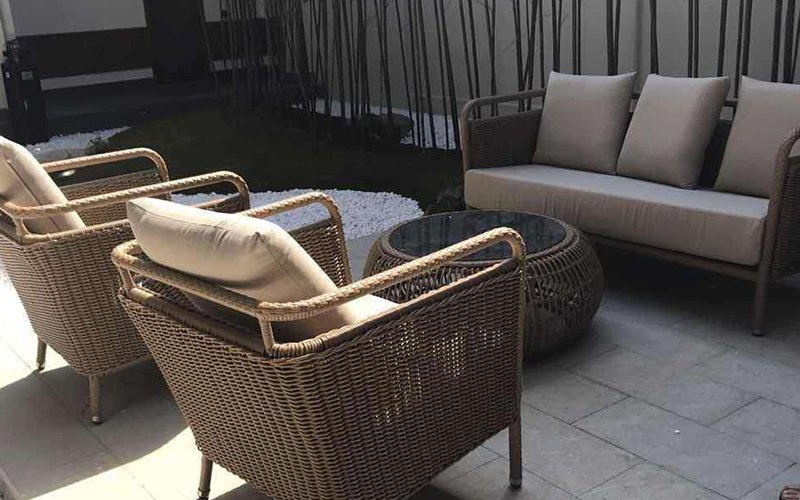
For instance, a curved teak sofa with a lightweight aluminum coffee table can transform a narrow balcony into a cozy retreat. - Embrace Curved Designs
Smooth, organic shapes break up rigid lines and make the space feel more welcoming. - Add Privacy Screens or Lattice Walls
These structures create separation while adding architectural character and warmth.
- Mix Materials for Depth
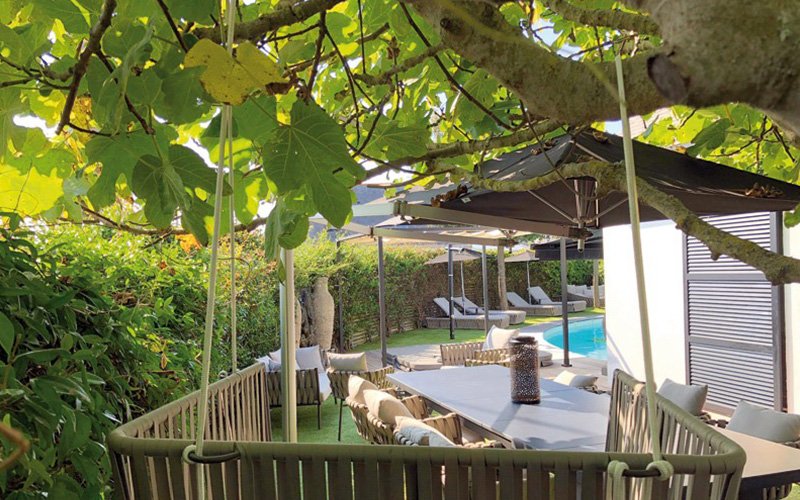
Combine rope, rattan, metal, and weatherproof fabrics for a balanced and sophisticated texture palette.
B. Functional Improvements
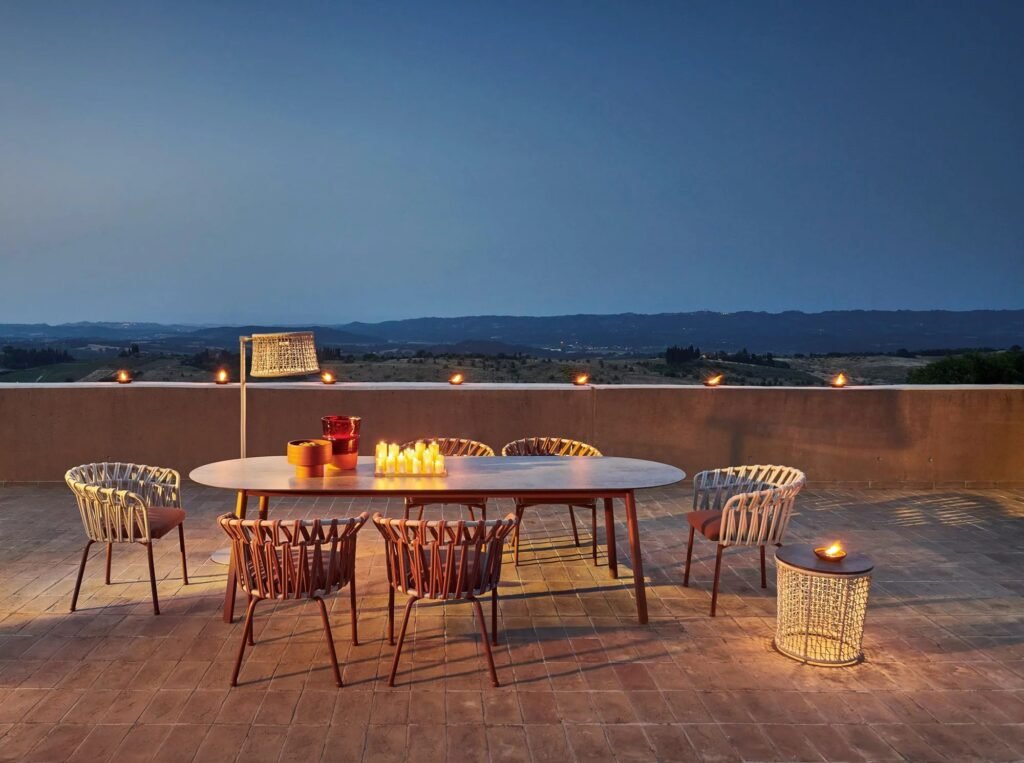
- Install Ambient Lighting
LED strips, pathway lights, or hidden uplighting instantly add depth and ambiance.
Over 75% of homeowners consider lighting the most valuable outdoor investment.
- Add an Outdoor Kitchen or Mini Bar
A small counter with a sink or grill turns your backyard into a social hub. - Upgrade Flooring Materials
Choose non-slip tiles, natural stone, or composite decking for a premium look. - Use Weatherproof Cushions and Fabrics
Opt for high-performance textiles like Sunbrella that resist fading, mold, and moisture. - Incorporate Hidden Storage Solutions
Benches with built-in drawers or tables with concealed compartments keep the area organized and sleek.
C. Finishing Touches
- Bring Nature Closer with Plants
Add planters or a vertical garden to create visual softness and improve air quality. - Install a Fire Pit or Artistic Sculpture
This creates a focal point and makes the area feel intentional. - Maintain a Cohesive Color Palette
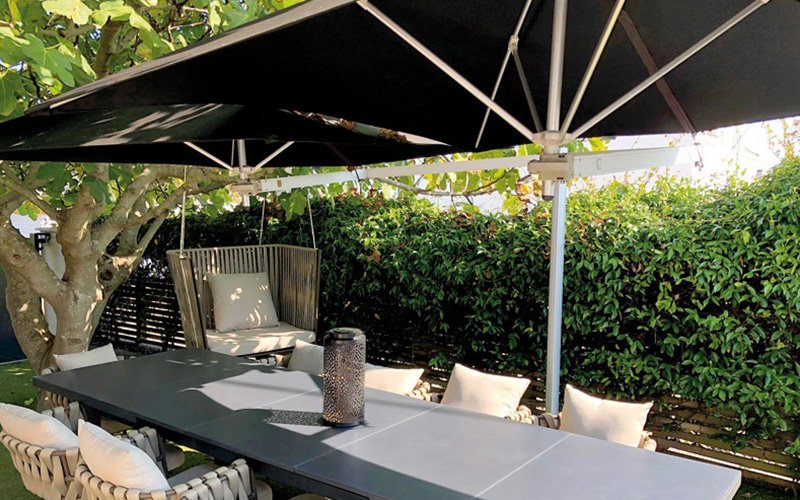
Stick to 2–3 complementary shades across furniture, decor, and fabrics for a refined feel. - Upgrade Umbrellas or Shade Systems
A modern canopy or cantilever umbrella adds both comfort and elegance.
- Guide the Eye with Furniture Arrangement
Arrange seating to frame a view — like a garden, pool, or outdoor feature wall — to create visual flow.
3. Why Custom Outdoor Furniture Makes the Biggest Difference
Standard builder grade furniture is mass-produced and lacks proportion and design harmony.
By contrast, custom outdoor furniture offers:
- Perfect fit — designed to match your exact layout and scale
- Cohesive aesthetics — aligned with your brand or personal style
- Enhanced comfort — ergonomic designs and premium materials
- Higher value perception — elevating both lifestyle and property worth
Custom design doesn’t just look better — it lives better.
4. Expert Tips for Grade Home Owners
If you own a grade home, here’s how to achieve maximum results with minimal investment:
- Start with furniture and lighting upgrades — the most visible improvements.
- Plan your layout before purchasing — measure carefully for balance and proportion.
- Prioritize weather-resistant materials — longevity is key to value.
Tip: Outdoor Whale offers free layout planning — upload your floor plan, and our designers will create a customized space proposal tailored to your environment.
5. Conclusion: From Grade to Great
Transforming a grade home into a custom-looking retreat isn’t about the budget — it’s about thoughtful design and tailored solutions.
With custom outdoor furniture and strategic upgrades, even the most basic outdoor space can exude the charm and comfort of a luxury residence.
At Outdoor Whale, we don’t just manufacture furniture — we design experiences.
Our design team works hand-in-hand with global clients to turn sketches, concepts, or visions into reality.
From Builder Grade to Custom Experience — Outdoor Whale helps you bring design dreams to life.
Contact info@ligointl.com today to start your outdoor customization journey.
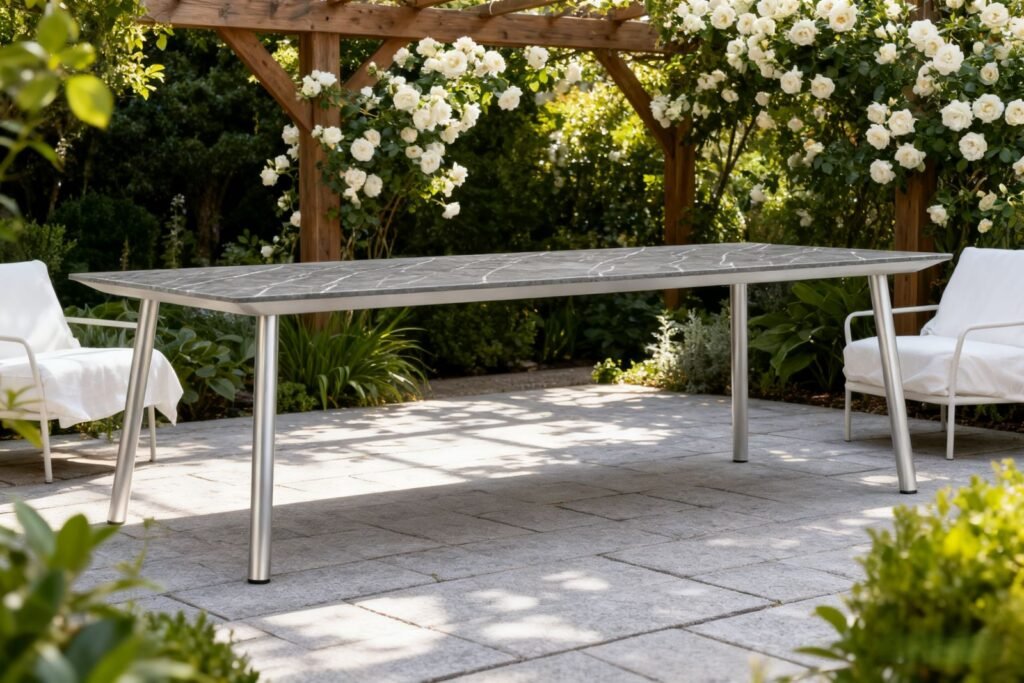
Metal outdoor furniture is widely appreciated for its durability and stylish appearance. However, exposure to sunlight, rain, and fluctuating humidity can lead to paint peeling, rust, and overall deterioration. Knowing how to paint metal outdoor furniture correctly helps restore its original beauty and ensures a longer lifespan, keeping your outdoor space both functional and visually appealing. Proper painting also protects your investment, making your furniture more resistant to the elements.
1. Understanding Metal Furniture and Painting Challenges
1.1 Common Metal Types
Outdoor furniture is commonly made from aluminum, steel, or iron. Aluminum is lightweight and rust-resistant but has a smooth surface, which can make paint adhesion challenging. Steel is strong but prone to rust, while iron is robust but requires thorough anti-corrosion treatment. Understanding the material of your furniture is crucial before painting. (General Services Administration (GSA) – Primers and Paints for Wrought Iron, Cast Iron, and Steel)
1.2 Why Paint Peels or Rusts
- Residual rust or old paint reduces adhesion
- UV exposure and moisture cause cracking and fading
- Using an incompatible primer or paint
- Environmental factors, such as rain, snow, or direct sunlight
2. Step-by-Step Guide to Painting Metal Outdoor Furniture
2.1 Surface Preparation
- Thoroughly clean the furniture to remove dust, dirt, and grease
- Sand the surface to remove rust and flaky paint, creating a smooth base
- Ensure the surface is dry before applying any primer or paint
Proper preparation is critical; without it, even high-quality paint may peel or fail to bond.
2.2 Choosing the Right Primer
Applying a rust-inhibiting primer is essential for long-lasting results. Options include epoxy primers or zinc-based primers. Matching the primer type to the metal ensures better adhesion and prevents rust formation beneath the paint.
2.3 Selecting the Right Paint
For outdoor metal furniture, choose paints designed for exterior metal surfaces. Options include oil-based, water-based, and powder-coated finishes. The paint should be weather-resistant, UV-protected, and capable of withstanding moisture and temperature fluctuations. Select colors and gloss levels according to your aesthetic preference, ensuring compatibility with the primer.
2.4 Painting Techniques
- Brush, roller, or spray methods can all be effective depending on furniture shape
- Apply multiple thin layers rather than one thick coat to prevent drips and cracking
- Allow sufficient drying time between layers, and avoid painting in extremely humid or wet conditions
2.5 Sealing and Protective Coating
After painting, a clear protective coat enhances durability by providing extra resistance to water, UV rays, and scratches. Regular inspections and touch-ups for minor scratches can prevent peeling and rust from spreading.
3. Maintenance Tips
- Regularly clean furniture to remove dust, leaves, and debris
- Use protective covers when furniture is not in use, especially during rain or intense sunlight
- Repair small scratches promptly to prevent moisture infiltration
- Avoid harsh chemical cleaners that can damage the paint or metal surface
Proper maintenance is essential to prolonging the life and appearance of your metal furniture.
4. Common Mistakes to Avoid
- Skipping surface preparation and sanding
- Using the wrong type of primer or paint
- Applying a single thick coat instead of multiple thin layers
- Ignoring proper drying times or environmental conditions
Avoiding these mistakes ensures a smooth, long-lasting finish.
5. Conclusion: Bring Out the Best in Your Outdoor Metal Furniture
Mastering how to paint metal outdoor furniture allows you to restore its original shine, prevent peeling, and extend its lifespan. By following proper preparation, primer selection, painting techniques, and routine maintenance, even weathered metal furniture can regain both elegance and functionality.
For those seeking professional results, partnering with an experienced manufacturer is invaluable. Outdoor Whale has extensive expertise in producing high-quality metal outdoor furniture, combining advanced production equipment, strict quality control, and a team of skilled designers. We provide durable, weather-resistant furniture and professional guidance on proper maintenance and restoration.
Contact info@ligointl.com today to explore our premium metal outdoor furniture and expert painting solutions, transforming your outdoor space into a stylish and enduring haven.