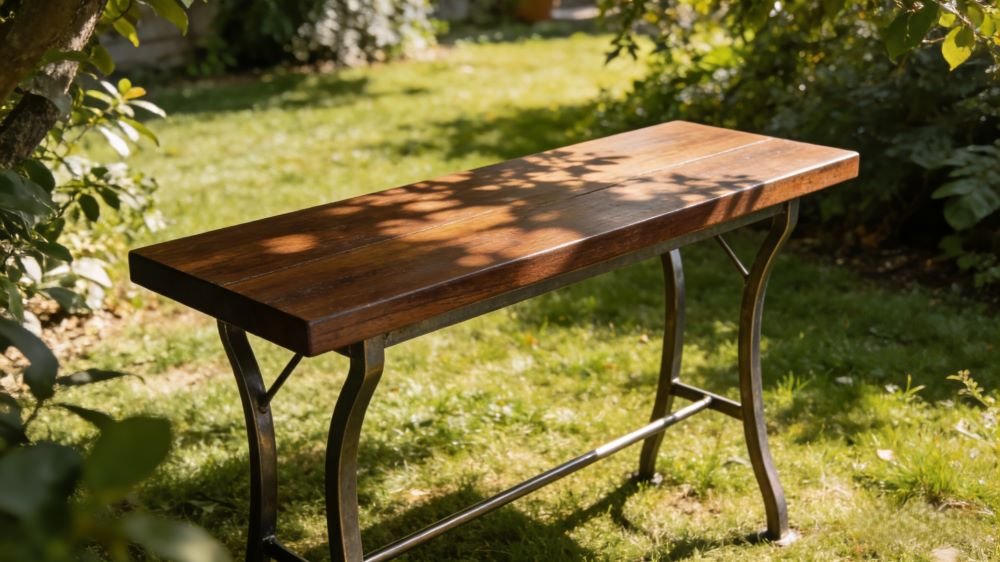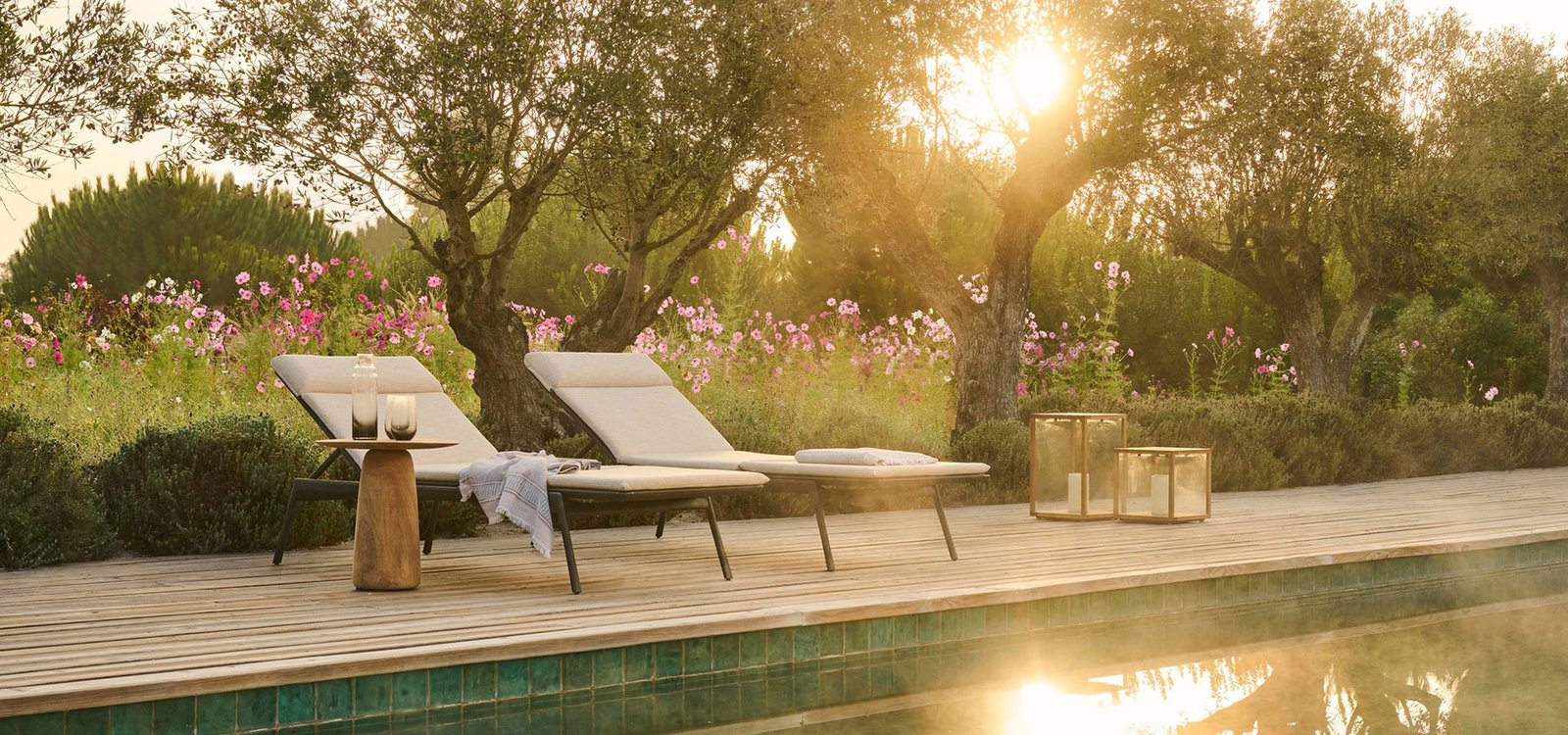
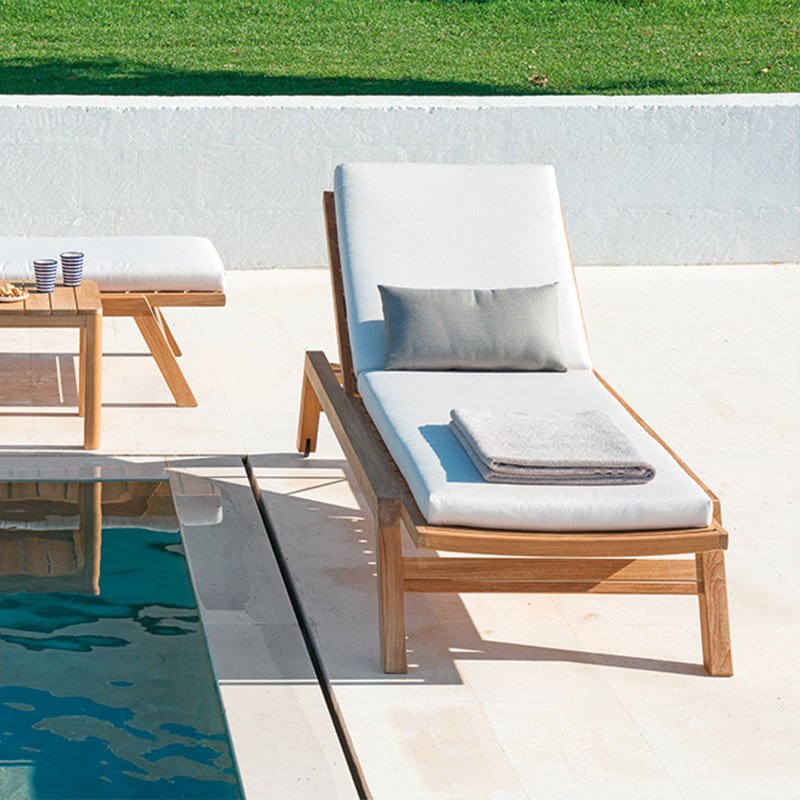
Teak furniture is prized for its natural oil content, dense grain, and resistance to decay and pests, making it one of the top choices for outdoor use. Yet over time, even teak will fade, gray, or develop fine cracks due to UV exposure, moisture fluctuations, and general wear.
Knowing how to restore teak outdoor furniture allows you to revive its original beauty and extend its usable life. Well-made teak furniture can easily last 30–50+ years with proper care and occasional restoration.
1. Understanding Teak’s Properties
Before restoring, it helps to understand teak’s mechanical properties and how they influence restoration work.
From Wood Database, teak’s Modulus of Rupture (MOR) is about 97.1 MPa, which reflects its ability to resist bending stress. This high MOR means teak can tolerate sanding and refinishing without losing structural integrity.
Because teak contains natural oils, any restoration work must begin with thorough cleaning to remove surface residues. Family Handyman recommends washing teak with mild soap and warm water to remove grime, old oil, and mildew before sanding or finishing.
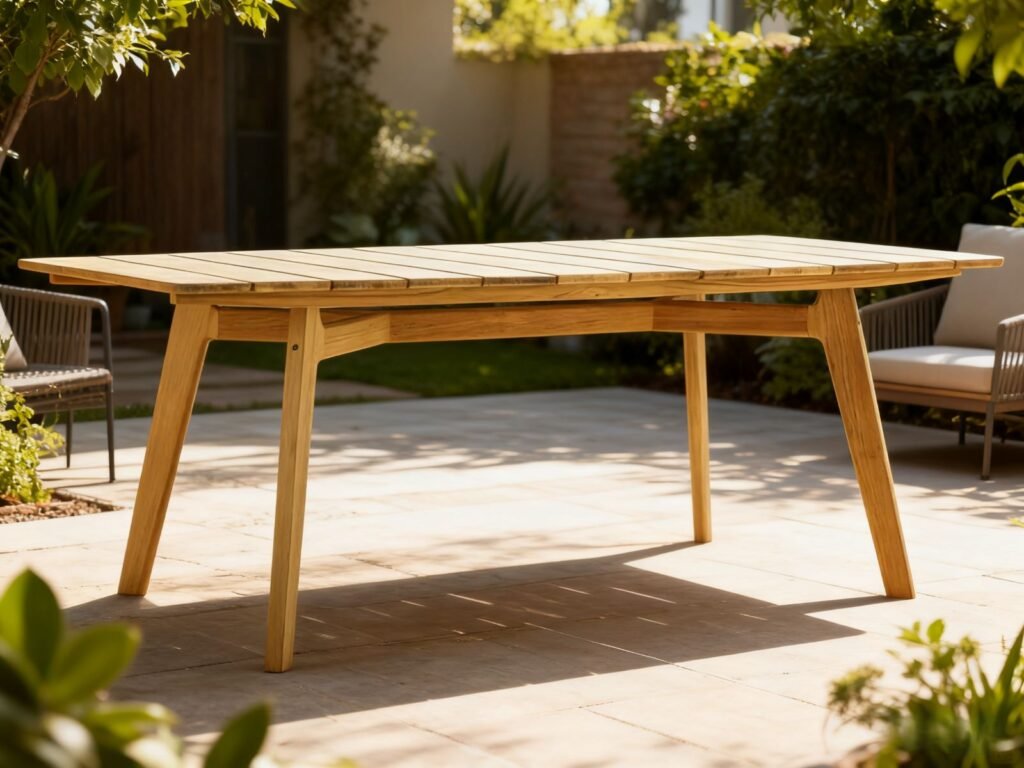
2. Step-by-Step Restoration Process
Here’s how to professionally restore teak furniture, including crack repair and finishing:
2.1 Clean and Prepare the Surface
- Begin by scrubbing the surface with a soft brush and soapy water to remove dirt, mold, or mildew.
- Avoid using high-pressure washers, which can damage the wood grain.
- Allow the surface to dry fully before proceeding.
2.2 Sanding Off Weathered Layers
- Use fine-grit sandpaper (120–180 grit) to gently remove the outer gray layer of aged teak.
- Always sand with the grain, aiming for a smooth, even surface.
2.3 Crack Repair (Teak Furniture Crack Repair)
- Carefully widen visible cracks into smaller splits using a thin blade to allow better filler penetration.
- Mix teak-colored sawdust with wood glue or epoxy, then fill the cracks.
- Once dry, lightly sand to blend the repair with surrounding wood.
- This method yields a more natural appearance than simply filling a large crack with filler alone.
2.4 Refinish and Protect
- Apply teak oil or a tinted sealer to restore warm tone and enrich the grain.
- After the oil has soaked in (~10–15 minutes), wipe off any excess.
- For added protection and sheen, apply a clear lacquer (matte, satin, or gloss).
- If you see a white haze, buff with fine wool or apply a de-hazing finish.
3. Restoring vs Repairing Teak Outdoor Furniture: What’s the Difference?
Many people use the terms “restore” and “repair” interchangeably, but when it comes to teak outdoor furniture, they serve very different purposes.
Repairing teak furniture focuses on fixing specific physical damage, such as cracks, loose joints, or broken components. It is usually localized and structural in nature.
Restoring teak outdoor furniture, on the other hand, is a comprehensive process aimed at reviving the furniture’s appearance and surface performance. Restoration typically includes cleaning, sanding, color recovery, oiling, and sealing.
In simple terms:
- If your teak furniture has cracks or splits, it needs repair.
- If it looks gray, dry, or weathered but is still structurally sound, it needs restoration.
- Many outdoor teak pieces require both repair and restoration to achieve the best long-term results.
Understanding this difference helps you choose the correct approach and prevents unnecessary damage or over-treatment.
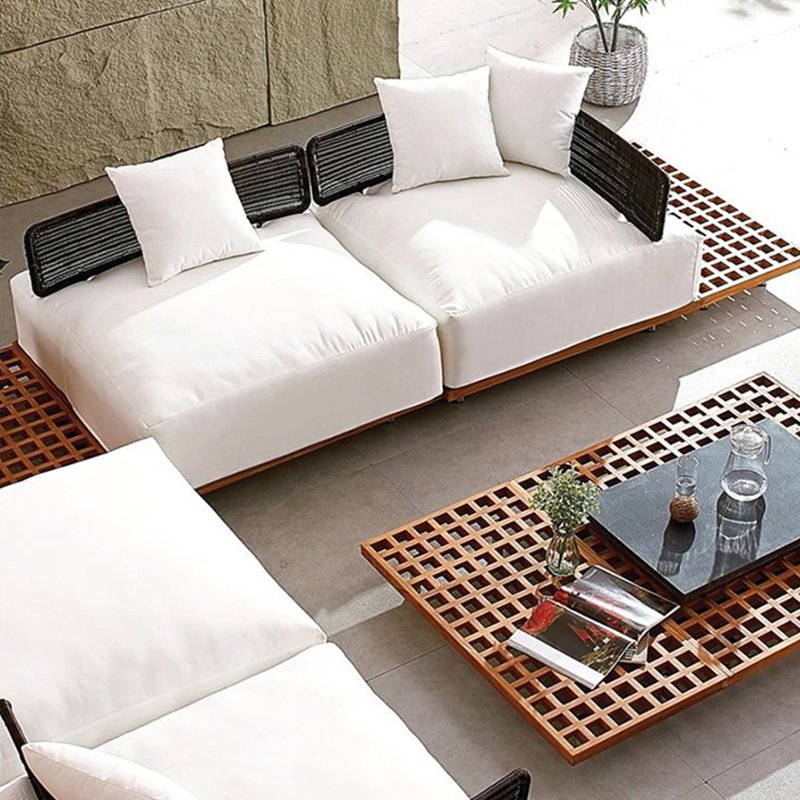
4. What Results Can You Expect After Restoring Teak Outdoor Furniture?
A proper teak restoration does more than improve appearance. It significantly enhances durability and extends the furniture’s usable life.
After restoring teak outdoor furniture, you can typically expect:
- Color recovery from silver-gray back to a warm golden or honey tone
- Smoother surfaces with reduced roughness and visible weathering
- Improved moisture resistance, reducing future cracking and checking
- Enhanced grain definition, making the wood look richer and more refined
- Extended lifespan, often adding 5–10 years of additional outdoor use
While restored teak will continue to age naturally, the rate of deterioration slows dramatically when cleaning, sanding, and finishing are done correctly.
5. How Often Should You Restore Teak Outdoor Furniture?
How often teak outdoor furniture needs restoration depends on climate, exposure, and maintenance habits.
General guidelines:
- In mild climates with partial shade, restoration is typically needed every 12–24 months
- In hot, humid, or coastal environments, restoration may be required every 6–12 months
- Furniture exposed to full sun and rain year-round will age faster than covered or sheltered pieces
Routine maintenance, such as light cleaning and oil reapplication, can significantly extend the interval between full restorations. Regular care reduces surface dryness and prevents deep cracking that requires more intensive repair later.
6. Preventing Future Cracks: Teak Maintenance Tips
Repairing is only part of the process. Consistent maintenance prevents recurrence:
Control Moisture & Humidity
Teak performs best when its moisture content stays around 8–12%, helping maintain dimensional stability and reduce checking.
Protect Against Weather & UV
Prolonged sun or rain accelerates drying, fading, and cracking. Use breathable covers, umbrellas, or sheltered placement. Architectural Digest notes that sealers help by locking in existing oils while blocking moisture and pollutants.
Reapply Oil Regularly
Once every 6–12 months is a good guideline to replenish oils and prevent surface brittleness.
Choose High-Quality Teak
Select furniture from trusted brands that kiln-dry teak to low moisture levels and follow strict quality control. These pre-processed pieces will be much less prone to cracking later.
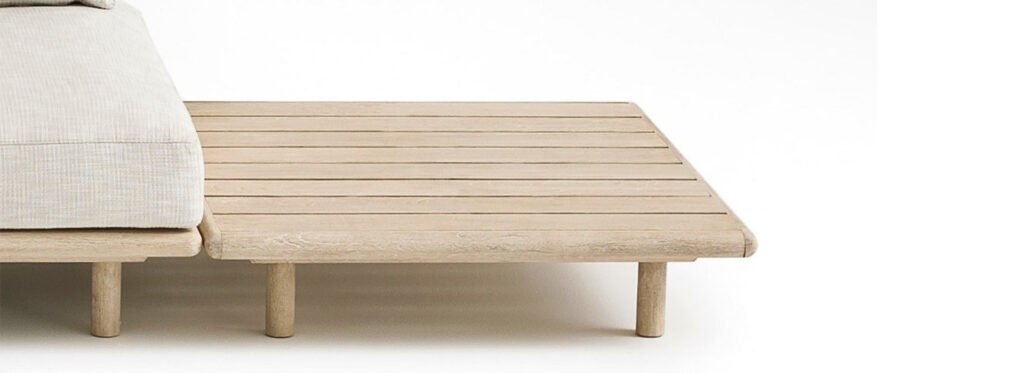
7. Common Mistakes to Avoid When Restoring Teak Outdoor Furniture
Even durable teak can be damaged by improper restoration techniques. Avoid these common mistakes to protect your furniture.
- Over-sanding: Excessive sanding removes too much material and weakens edges and joints.
- Skipping cleaning before oiling: Applying oil over dirt or mildew traps contaminants and causes uneven coloring.
- Using indoor wood finishes: These finishes are not designed for outdoor UV exposure and will peel or discolor.
- Pressure washing: High-pressure water damages teak grain and accelerates surface erosion.
- Over-oiling: Excess oil attracts dust and creates a sticky surface rather than improving protection.
Correct restoration prioritizes balance, gentle treatment, and materials specifically designed for outdoor teak.
8. Restore or Replace: Is Teak Outdoor Furniture Worth Restoring?
Teak outdoor furniture is often worth restoring, especially when made from high-grade, kiln-dried teak.
Restoration is recommended when:
- The furniture is structurally stable
- Cracks are minor and repairable
- The frame and joints remain solid
- The piece is made from genuine teak rather than veneer or composites
Replacement may be a better option when:
- Structural joints are severely compromised
- Wood rot has penetrated deeply
- The furniture was originally made from low-grade or improperly dried teak
High-quality teak furniture is an investment. With proper restoration and maintenance, it can last several decades, making restoration far more cost-effective than replacement.
9. When to Call in a Professional
If cracks are deep or involve structural joints, it’s safer to contact experts. Incorrect DIY repair can worsen damage or compromise stability. Always consult your furniture brand or skilled technician for serious restoration jobs.
10. Conclusion: Let Your Teak Shine Again
Mastering how to restore teak outdoor furniture enables you to preserve the elegance and longevity of your outdoor pieces. With cleaning, sanding, crack repair, and finishing, even aged teak can regain its rich, warm appeal.
If you seek premium teak pieces, Outdoor Whale is here to help. As a seasoned outdoor furniture manufacturer, we combine craftsmanship with quality control to create durable, beautiful teak solutions. Contact info@ligointl.com today to bring your teak furniture back to life and elevate your outdoor living.