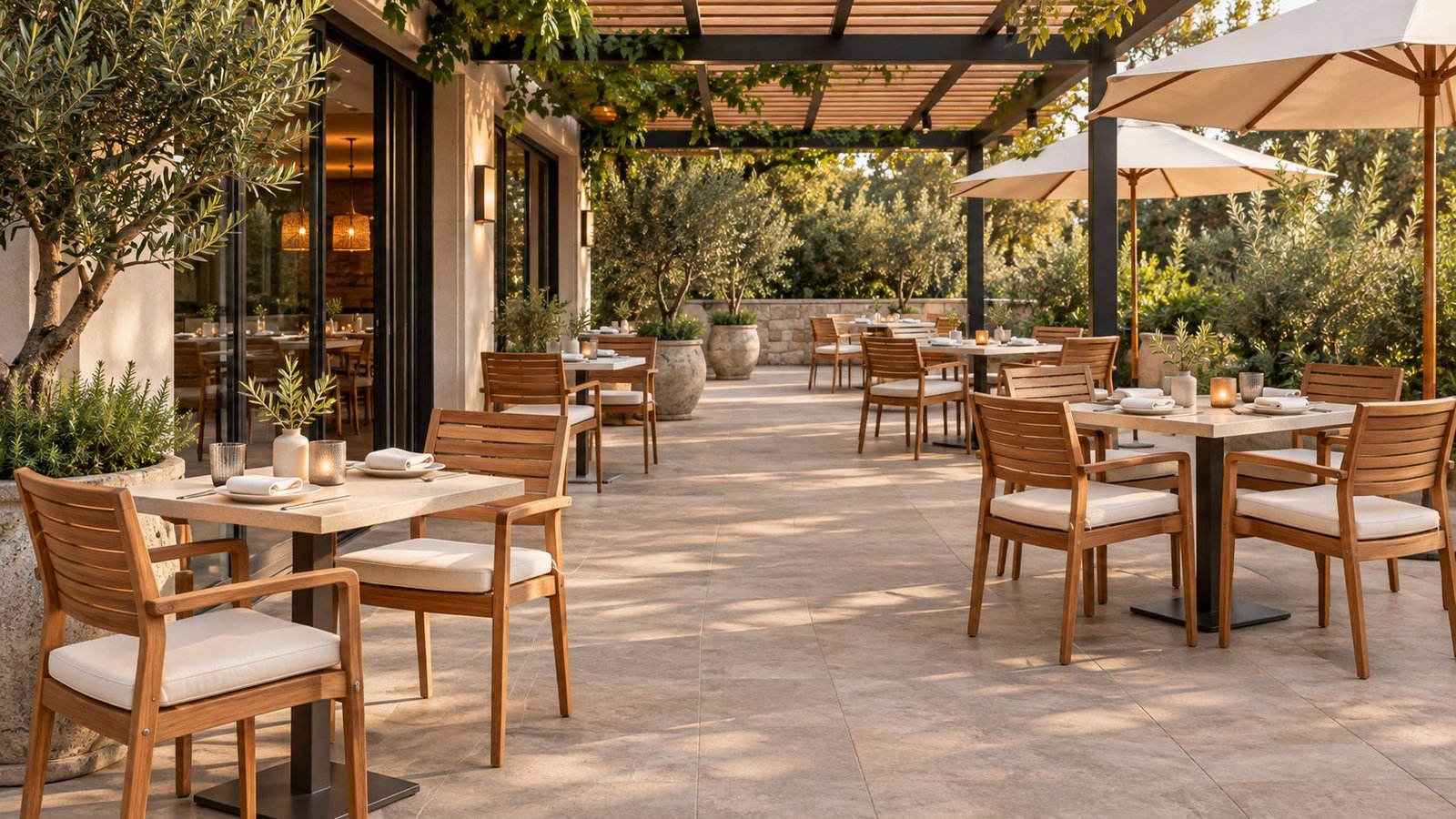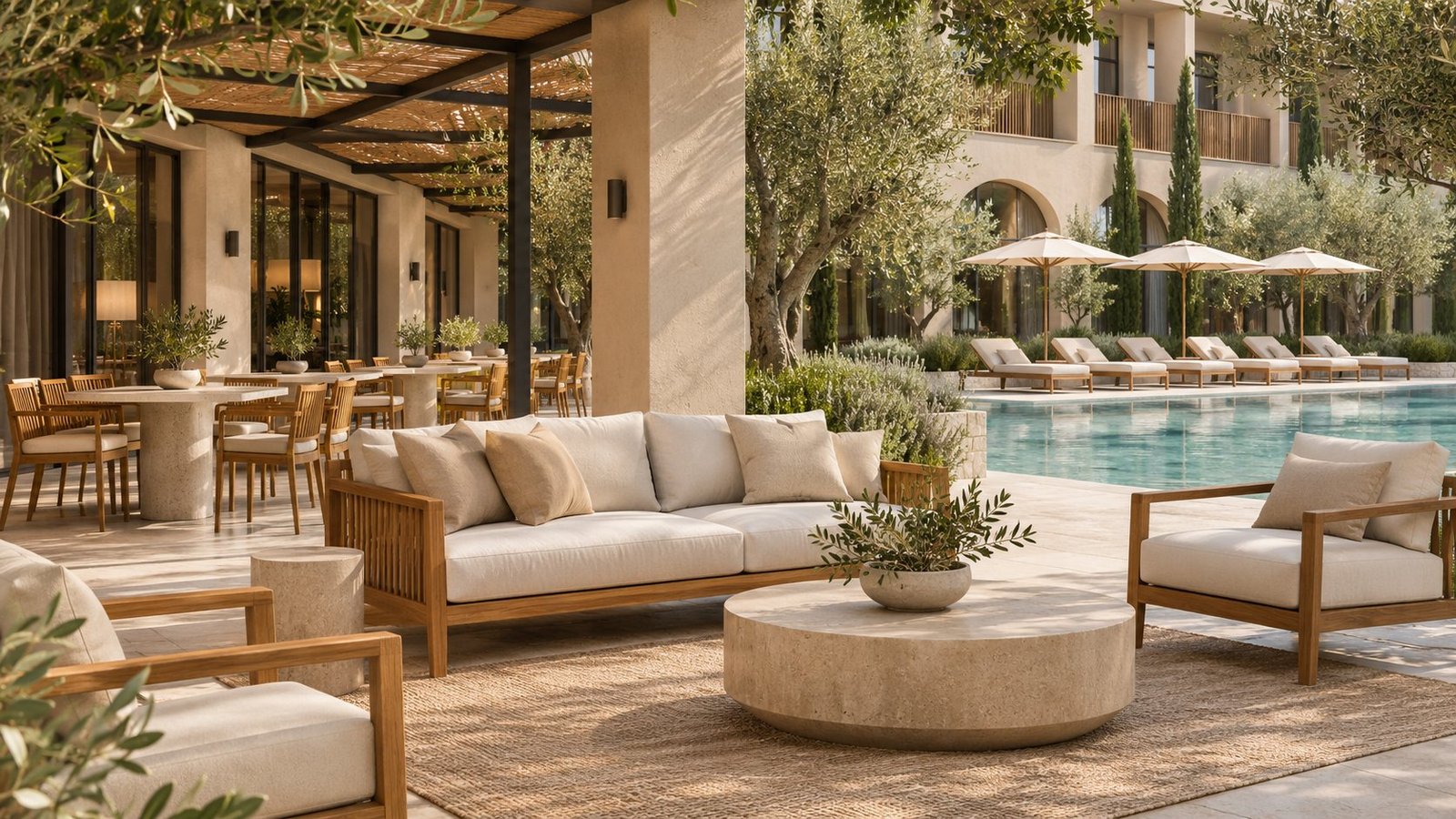
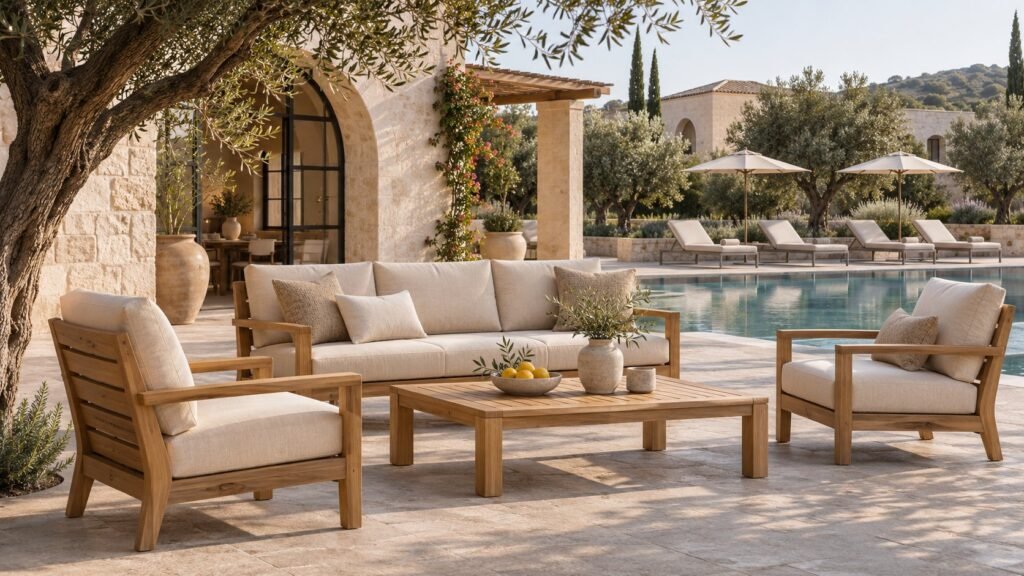
A poolside sunbed, a restaurant chair, and a private terrace sofa serve different purposes. Choosing them from the same catalog does not mean they should share the same specifications.
For hotel owners, designers, and procurement teams, the next step after choosing a style is turning it into a purchasing brief. This hotel outdoor furniture procurement checklist covers the details to confirm before approving samples, comparing quotations, and arranging delivery.
1. Define How Each Outdoor Area Will Operate
Pool decks: Plan guest circulation, side tables, cleaning access, and cushion storage. Ask the supplier to confirm suitability for the intended pool environment.
Outdoor restaurants: Test chairs and tables together. Check seat height, arm clearance, stability, and the space needed when guests pull chairs out. Include daily handling and storage in the brief.
Lounge areas: Arrange seating around conversation and service. Deep sofas may suit relaxed seating, while more upright chairs may work better where guests eat or work.
Guest balconies: Check usable space, door access, lift dimensions, and the delivery route. Confirm circulation and accessibility requirements with your project team.
2. Request a Written Material Specification
Descriptions such as “outdoor,” “weather-resistant,” and “commercial” should lead to specific questions. Ask what each term means for the proposed model and project location.
Aluminum frames
Aluminum can be useful where furniture needs to be moved regularly. Review the coating specification, surface preparation, fasteners, and care requirements. For coastal projects, obtain written confirmation that the complete product is suitable for the intended exposure. Frame material alone does not establish the performance of a finished chair.
Teak and other wood options
Specify the wood species, finish, and appearance you expect to maintain. Ask how exposure may change the surface or color, what maintenance is required, and which changes are covered by the warranty. Agree on acceptable variation using a physical sample.
Woven rope and synthetic wicker
Check the frame underneath the weave as well as the visible material. Request cleaning instructions and repair options. If a quotation mentions UV resistance or strength testing, ask for the report and confirm that it applies to the material or model offered.
3. Evaluate the Complete Cushion
Do not select cushions by color alone. Request the fabric specification, filling, cover construction, and cleaning instructions. Ask how the complete cushion handles water and what conditions it needs for drying. A water-repellent cover does not, by itself, demonstrate that the cushion will remain dry inside.
- Are covers removable and replaceable?
- Which cleaning products and methods are permitted?
- How should cushions be dried and stored?
- Can covers and inserts be ordered separately?
Use the care instructions for the fabric actually supplied. Cleaning guidance can differ by fabric type and application; do not assume one method suits every textile.
4. Approve a Sample Before the Bulk Order
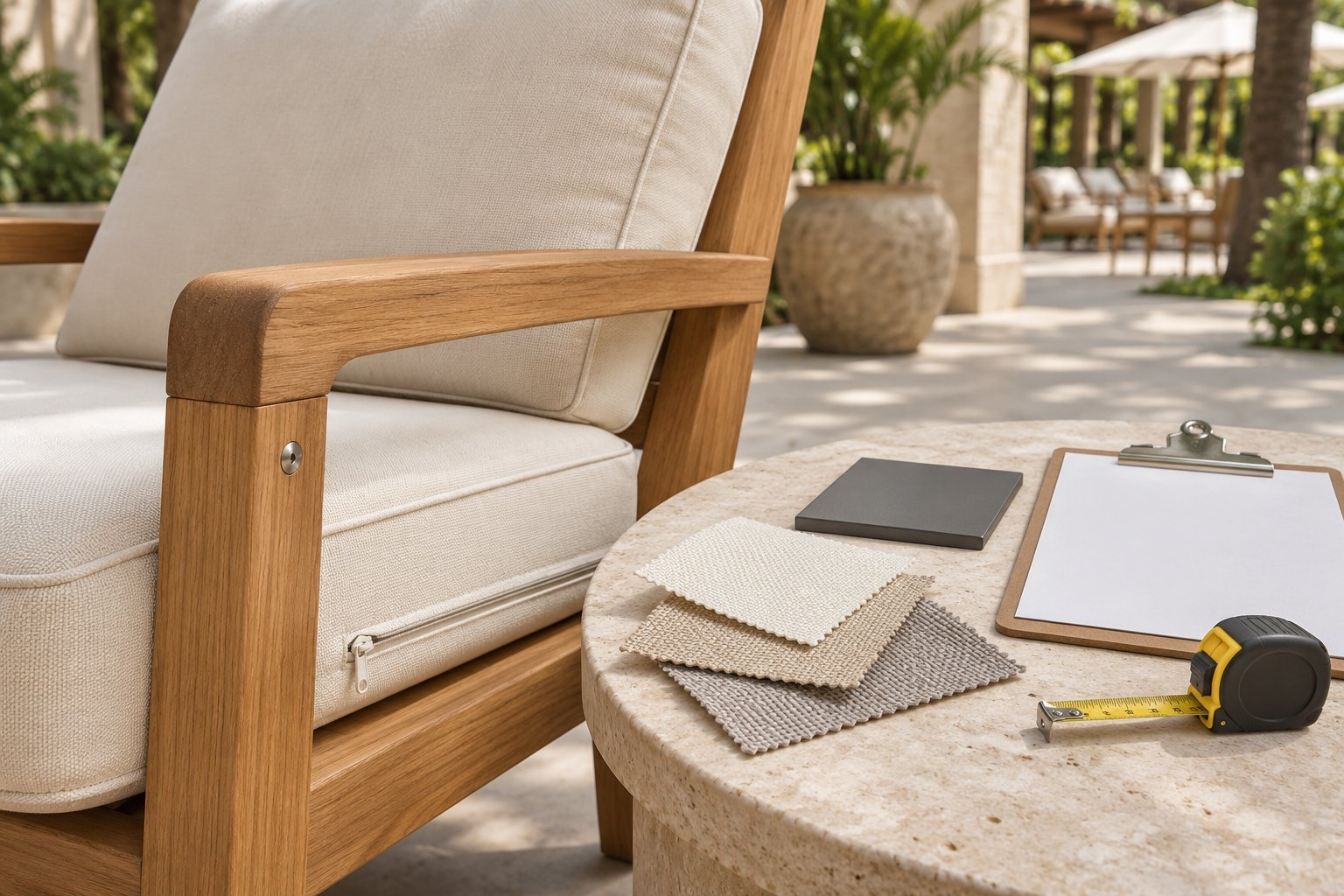
Evaluate a sample in the proposed configuration. Sit in the chair for more than a brief showroom test and use it with the intended table. Check arm comfort, cushion movement, stability, and the finish at contact points.
Ask the operations team to handle the sample too. Can staff move it safely? If it is designed to stack, is the stacked arrangement practical for the available storage? Are cleaning and routine inspections straightforward?
Record approved dimensions, materials, finish, fabric, and construction details in the purchase specification. Photos should support the written specification rather than replace it.
5. Compare Quotations on the Same Basis
The unit price is only part of the decision. Compare freight, packaging, assembly, cleaning, storage, and replacement components alongside the furniture itself.
Request written warranty terms, exclusions, and the claims process. Check the availability of spare feet, hardware, covers, and other serviceable parts. A lower purchase price may become less attractive if a small damaged component requires replacing an entire piece.
6. Build a Delivery Plan Around Installation
Work backward from the date furniture must be installed and ready for guests. Allow time for sample approval, production, inspection, shipping, customs clearance, and installation.
Confirm which milestones the supplier controls and which depend on logistics providers or local arrangements. Include a buffer for delays; an estimated shipping date is not an installation date. For phased projects, identify the areas that must be ready first.
Your Pre-Order Checklist
- Site: location, exposure, layout, access, and storage requirements.
- Products: model, quantity, dimensions, materials, finish, and fabric.
- Approval: sample sign-off and agreed construction details.
- Operations: cleaning instructions, handling, spare parts, and warranty.
- Delivery: packaging, inspection, transport responsibilities, and installation schedule.
Discuss Your Hotel or Resort Project
Share your outdoor layout, furniture quantities, preferred materials, and target installation date. Site photos and reference images can make the discussion more specific.
Explore Outdoor Whale’s furniture range or contact our team to discuss your project requirements. For broader design considerations, read our resort outdoor furniture selection guide.